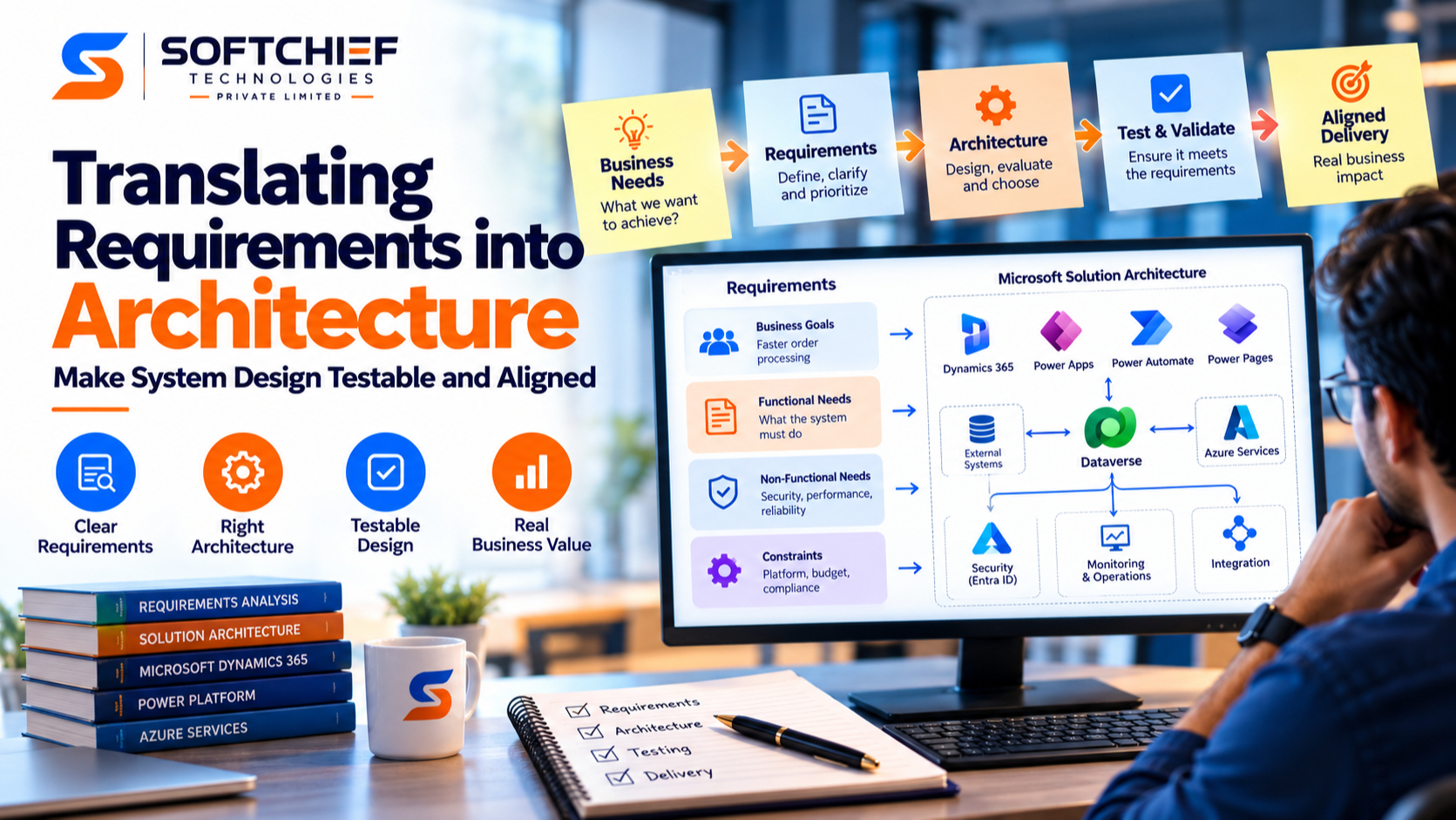
Translating Requirements into Architecture: Make System Design Testable and Aligned
Introduction
A system can pass every feature test and still disappoint the people who depend on it. If it slows down during peak use, exposes sensitive data, or costs too much to change, the design missed a need that mattered.
Translating requirements into architecture means turning goals and system needs into decisions a team can build, test, and maintain. The hard part is knowing which needs should shape the system’s structure and how to handle priorities that compete.
A practical process can help: clarify requirements, find architectural drivers, compare design options, and test the result. Keep each key decision tied to stakeholder intent, so the team can explain why the design fits.
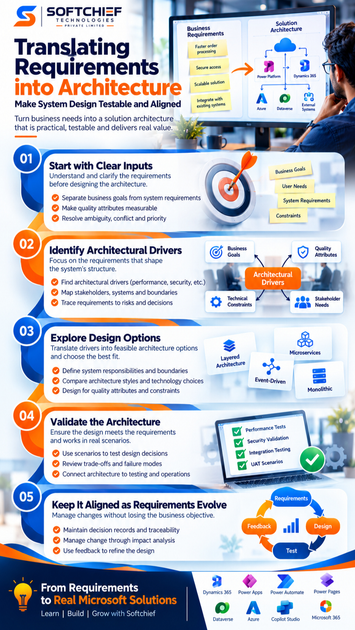
Start Translating Requirements into Architecture with Clear Inputs
Architecture depends on the quality and context of the requirements behind it. Vague requests can become hidden design assumptions, while conflicting needs can lead to costly rework. Clarify what people mean before choosing a system structure.
Separate business goals from system requirements
A business goal describes the outcome an organization wants, such as faster order processing. A stakeholder need explains what a person or group requires; functional requirements state what the system must do. Constraints, such as a required hosting platform or legal rule, limit the available choices.
Connect each requirement to the goal it supports. For example, a requirement to show stock levels may support a goal of reducing canceled orders. That link helps teams protect the purpose behind a request when they choose how to build it.
Make quality attributes measurable
Words such as “fast,” “secure,” and “available” mean different things to different people. Turn them into conditions that name the workload, operating setting, expected response, and a way to check success. The SEI’s Attribute-Driven Design method uses quality attribute requirements, functional needs, and constraints as inputs to architecture design.
For example, a team might define a search target as: under a stated peak load, 95% of search requests return within 300 milliseconds. The figure is a sample target, not a universal benchmark. Set thresholds with the people who own the business and user needs.
Resolve ambiguity, conflict, and priority
Ask what unclear terms mean in practice. “Easy to use” might mean fewer steps for a frequent task, while “secure access” might require extra checks that slow it down. Record each assumption, open question, priority, and person responsible for resolving it.
When two requirements conflict, bring the trade-off to the stakeholders who own the outcome. A short discussion now can prevent a design decision from silently favoring one group. Also mark requests that fall outside the agreed scope.
Identify the Requirements That Should Drive Architecture
Some requirements affect the system’s structure; others can be handled within a component or feature. Focus architecture work on needs that change boundaries, technology, deployment, data handling, or integration. These are the requirements with the greatest design impact.
Find architectural drivers
Architectural drivers include high-priority business goals, quality attributes, and technical constraints. A strict response-time target may shape data access and caching. A rule to keep customer records in a specific region may affect hosting and backup choices.
Ask which requirements would force a major redesign if the team discovered them late. Those deserve early attention. The SEI’s method recommends identifying drivers before choosing design concepts, then checking those concepts against quality scenarios.
Map stakeholders, systems, and boundaries
List the people and groups who use, operate, support, or regulate the system. Include external services, existing tools, and the places where the system must run. A simple context diagram can show who sends or receives information and where responsibility changes hands.
For a booking system, the diagram might include customers, staff, a payment service, and a calendar platform. Marking these connections reveals integration needs and data ownership questions before teams split the system into parts. Keep the diagram simple enough for both technical and non-technical readers.
Trace requirements to risks and decisions
Traceability links a key requirement to the risk it creates, the architecture decision that addresses it, and the way the team will verify it. A small record can include a requirement ID, its rationale, the decision, an owner, and a validation method. This gives reviewers a direct path from need to evidence.
For example, a data-retention rule might lead to a decision about where records live and when they are deleted. A test or audit can then check whether the system follows that rule. Trace only the requirements that matter to major design choices; tracking every detail can add work without improving clarity.
Translate Architectural Drivers into Design Options
Once the main drivers are clear, define the system’s responsibilities and compare plausible designs. Avoid picking a technology first and then reshaping the requirements to fit it. Instead, judge each option against agreed criteria and known constraints.
Define the system’s responsibilities and boundaries
Break the system into components or services with clear responsibilities. Decide which part owns each task, which data it controls, and what it exposes through an interface. These boundaries affect how teams make changes, protect data, deploy updates, and coordinate work.
A single application with well-separated modules may suit a small team and a shared release process. Separate services may help when parts need different release schedules or scaling needs, but they add network calls and operating work. Choose boundaries for real needs, not fashion.
Compare architecture styles and technology choices
Layered, event-driven, service-oriented, and monolithic designs each fit different conditions. A layered system can keep user, business, and data concerns apart. Event-driven designs can help systems respond to changes across components, while services can support independent deployment where teams need it.
Compare options against explicit criteria such as response time, security, ease of change, and team skills. Record benefits, trade-offs, limits, and assumptions. No style is best for every system, and a familiar technology does not erase its operating costs.
Design for quality attributes and constraints
Data flow, integration patterns, deployment choices, and infrastructure all affect quality. For example, a service that relies on a remote system may need a plan for slow responses or outages. A requirement for rapid recovery may shape backup frequency and restoration steps.
Review operational needs early: who deploys updates, who monitors failures, and what tools already exist? Check legal, platform, and team constraints before settling on a design. This keeps architecture choices grounded in conditions the team will face after launch.
Validate the Architecture Against the Requirements
A design that sounds sound in a meeting still needs evidence. Test the most important assumptions before implementation makes major changes expensive. Validation can include scenario reviews, focused prototypes, risk analysis, and tests of key interfaces.
Use scenarios to test design decisions
Write concrete scenarios for important quality attributes. For example, describe what happens when traffic rises during a sale, a payment service stops responding, or a team adds a new checkout option. State the system’s expected response and how you’ll measure it.
The IREB guide to quality requirements describes scenarios as a way to turn broad quality concerns into specific, measurable requirements. Use scenarios to check whether the proposed architecture has a clear path to meeting each target. If the response cannot be measured, refine the requirement.
Review trade-offs and failure modes
Hold an architecture review with the people who understand the user needs, implementation, security, and operations. Ask which assumptions carry the most risk and what would happen if they proved wrong. A small prototype can test an uncertain integration or a performance concern before the team commits.
Review failure cases too. If a dependency is unavailable, does the system stop, retry, or offer a limited service? The right response depends on the business need, but it should be an intentional choice rather than a surprise.
Connect architecture to verification and operations
Turn requirements into acceptance tests, monitoring signals, service objectives, and support procedures. A response-time target, for example, needs a test under the stated workload and a production signal that shows whether the system stays within bounds.
Plan for deployment, support, recovery, and ongoing compliance as part of the design. A system is not ready just because its components work in a test environment. The team also needs a clear way to detect problems and restore service.
Keep Requirements and Architecture Aligned as the System Evolves
Requirements change as teams learn from users, delivery work, and production use. Architecture should change when evidence or new needs justify it. Lightweight records and regular impact checks help prevent decisions from drifting away from what stakeholders value.
Maintain decision records and traceability
Write concise architecture decision records that capture the context, options, reason for the choice, and its effects. Link important decisions to requirements, components, and tests. A record should help a new team member understand the choice without reading a long report.
Keep those links current as code and tests change. If a decision no longer fits, update the record rather than leaving old guidance in place. Clear records make later reviews faster and help teams see which trade-offs they accepted.
Manage change through impact analysis
When a requirement changes, check its effects on interfaces, dependencies, risks, cost, and verification. A new data-retention rule, for instance, may affect storage, backups, deletion jobs, and audit checks. Identify who owns each affected area before changing the design.
Bring the right stakeholders into the decision, including product, engineering, security, and operations when relevant. Then update the requirement, architecture record, and tests together. This avoids a gap between an approved change and the system teams actually build.
Use feedback to refine the design
Prototypes show whether assumptions hold; delivery work reveals where boundaries help or hinder; production monitoring exposes real operating conditions. User feedback can also uncover needs that were missing from the original requirements. Use each source to review the design, not to trigger change for its own sake.
Revise the architecture when evidence shows that a key requirement is at risk or the cost of an accepted trade-off has changed. Keep the current design when it still meets the need and the trade-off remains acceptable. The goal is a fit design, not constant redesign.
Conclusion
Translating requirements into architecture starts with clear, prioritized needs. Identify the requirements that shape system structure, compare design options against explicit criteria, and validate decisions with scenarios and operational evidence. Then keep requirements, decisions, and tests linked as the system changes.
Architecture decisions should be traceable to requirements and clear trade-offs. Quality attributes need concrete scenarios and ways to verify them. Start by reviewing your highest-risk requirement, then record the design choice and how the team will test it.