What Recruiters Look for in a Power Platform Developer Resume
Introduction
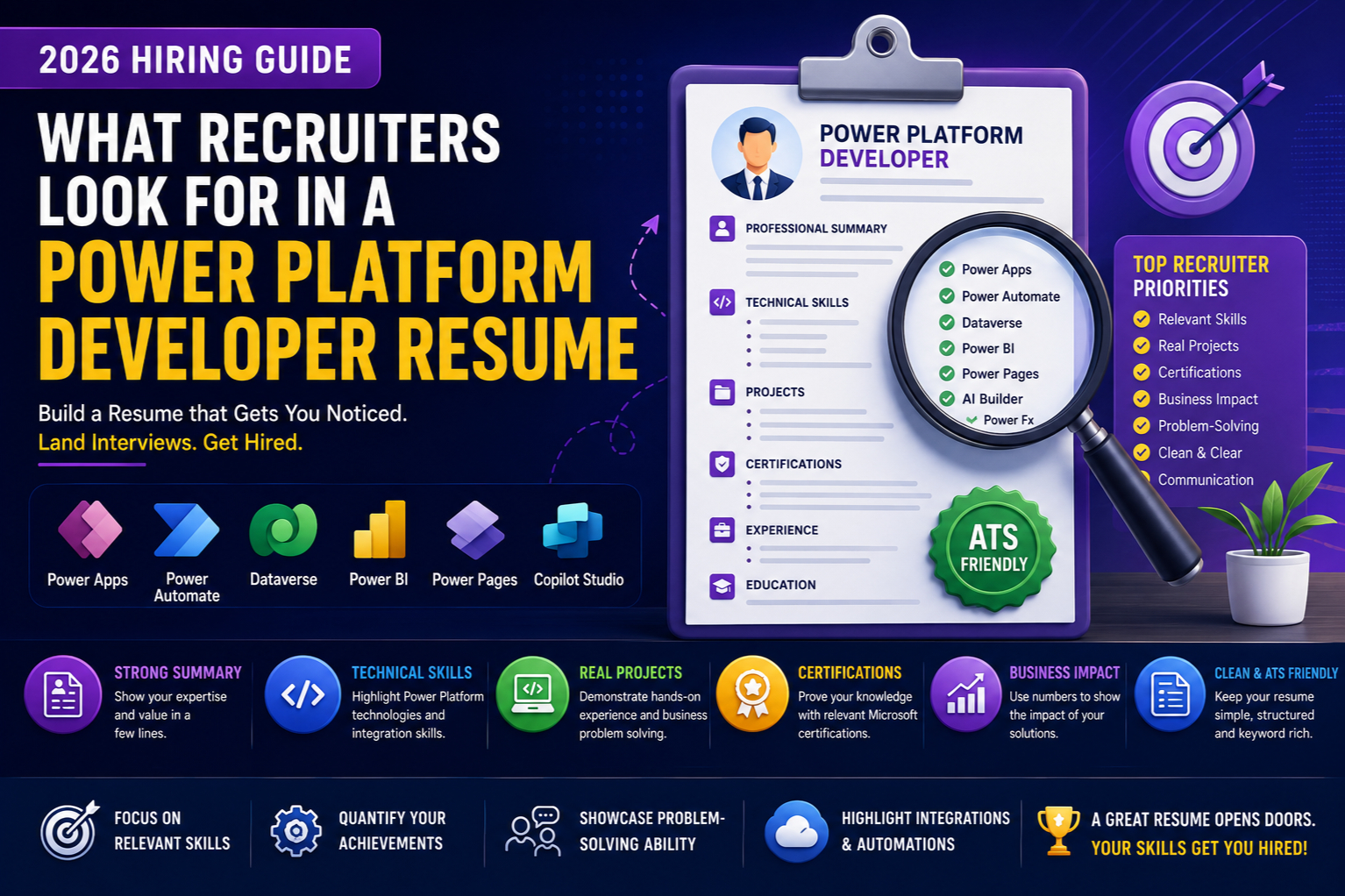
The demand for Microsoft Power Platform Developers continues to rise as organizations embrace digital transformation, automation, and AI-powered business applications. Every day, recruiters receive hundreds of resumes for Power Platform roles—but only a small percentage make it to the interview stage.
Why?
Because many resumes focus on listing technologies rather than demonstrating business value and practical experience.
A recruiter typically spends less than 10 seconds scanning a resume before deciding whether it deserves further attention. During those few seconds, they’re looking for clear evidence that a candidate has the right technical skills, project experience, certifications, and problem-solving mindset.
Whether you’re a fresher, recent graduate, career switcher, or experienced developer, this guide explains exactly what recruiters look for in a Power Platform Developer resume and how you can build one that stands out.
Why Your Resume Matters More Than Ever
Your resume is your first opportunity to make an impression.
A strong resume should answer these questions immediately:
- Does the candidate understand Microsoft Power Platform?
- Have they built real applications?
- Can they solve business problems?
- Are they familiar with enterprise technologies?
- Will they be able to contribute quickly?
Your goal isn’t to list everything you’ve learned—it’s to show how your skills translate into business value.
What Recruiters Scan First
Most recruiters review resumes in a predictable order.
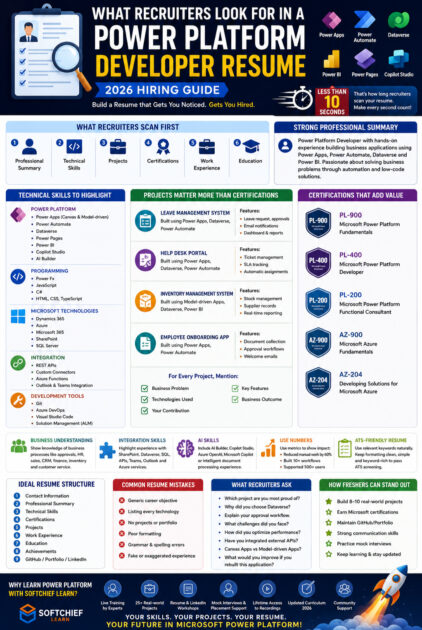
1. Professional Summary
2. Technical Skills
3. Projects
4. Certifications
5. Work Experience
6. Education
If the first half of your resume doesn’t capture attention, the rest may never be read.
1. A Strong Professional Summary
Your summary should be concise and focused.
Instead of writing:
“Looking for a challenging opportunity where I can utilize my skills.”
Write something like:
Power Platform Developer with hands-on experience building business applications using Power Apps, Power Automate, Dataverse, and Power BI. Passionate about solving business problems through automation and low-code solutions. Experienced in developing real-world projects and continuously learning Microsoft technologies.
A good summary highlights:
- Your specialization
- Core technologies
- Practical experience
- Career objective
Keep it to 3–5 lines.
2. Technical Skills That Recruiters Want to See
Avoid creating an endless list of technologies.
Instead, organize your skills into logical categories.
Power Platform
- Power Apps (Canvas & Model-driven)
- Power Automate
- Microsoft Dataverse
- Power Pages
- Power BI
- Copilot Studio
- AI Builder
Programming
- Power Fx
- JavaScript
- C#
- HTML
- CSS
- TypeScript
Microsoft Technologies
- Dynamics 365
- Azure
- Microsoft 365
- SharePoint
- SQL Server
Integration
- REST APIs
- Custom Connectors
- Azure Functions
- Outlook Connector
- Teams Integration
Development Tools
- Git
- Azure DevOps
- Visual Studio Code
- Solution Management
- ALM
Organizing skills makes your resume easier to scan and improves readability.
3. Real Projects Matter More Than Certifications
One of the biggest mistakes freshers make is listing certifications without showcasing projects.
Recruiters want evidence that you can build solutions.
Include projects such as:
Leave Management System
Built using:
- Power Apps
- Dataverse
- Power Automate
Features:
- Leave request submission
- Manager approvals
- Email notifications
- Dashboard
Help Desk Portal
Features:
- Ticket management
- SLA tracking
- Assignment workflow
- Notifications
Inventory Management System
Capabilities:
- Stock management
- Barcode support
- Supplier records
- Reporting
Employee Onboarding App
Includes:
- Document collection
- Approval workflows
- Welcome emails
- Equipment requests
For every project, mention:
- Business problem
- Technologies used
- Your contribution
- Key features
- Business outcome (if applicable)
Projects should occupy a significant portion of your resume, especially if you’re a fresher.
4. Certifications That Add Value
Certifications demonstrate commitment to learning.
Relevant Microsoft certifications include:
Beginner
- PL-900 – Microsoft Power Platform Fundamentals
Developer
- PL-400 – Microsoft Power Platform Developer
Functional Consultant
- PL-200 – Microsoft Power Platform Functional Consultant
Cloud
- AZ-900 – Microsoft Azure Fundamentals
- AZ-204 – Developing Solutions for Microsoft Azure
Place certifications in a dedicated section with the certification name and completion year.
5. Show Business Understanding
Recruiters don’t just hire developers—they hire professionals who understand business processes.
Highlight experience with:
- Approval workflows
- Expense management
- HR automation
- CRM processes
- Sales automation
- Customer service
- Inventory management
Explain how your solutions improve efficiency or solve specific business challenges.
6. Demonstrate Integration Skills
Modern Power Platform solutions rarely exist in isolation.
Mention experience with integrations such as:
- SharePoint
- Microsoft Teams
- Outlook
- SQL Server
- REST APIs
- Azure Functions
- Excel
- Dynamics 365
Integration skills indicate you’re prepared for enterprise projects.
7. Include AI Skills
AI is becoming an important part of the Microsoft ecosystem.
If you’ve worked with:
- AI Builder
- Copilot Studio
- Azure OpenAI
- Microsoft Copilot
- Intelligent document processing
Include these prominently.
Recruiters increasingly value candidates who understand AI-powered business applications.
8. Use Numbers Wherever Possible
Quantifiable achievements make your resume stronger.
Instead of writing:
Developed a Power Apps application.
Write:
Developed a Power Apps application used to automate leave approvals, reducing manual processing time by an estimated 60% in a simulated enterprise scenario.
Examples include:
- Number of users supported
- Number of workflows created
- Number of reports developed
- Number of projects completed
- Performance improvements
- Time saved through automation
If you’re using project-based examples rather than production systems, clearly indicate they were academic or portfolio projects.
9. Keep the Resume ATS-Friendly
Many companies use Applicant Tracking Systems (ATS) before a recruiter sees your resume.
Include relevant keywords naturally, such as:
- Power Apps
- Power Automate
- Dataverse
- Power BI
- Power Pages
- Canvas Apps
- Model-driven Apps
- Power Fx
- SharePoint
- Dynamics 365
- Azure
- REST API
- JavaScript
- SQL Server
- Git
- Azure DevOps
- AI Builder
- Copilot Studio
Avoid keyword stuffing—focus on relevance.
10. Showcase GitHub and Portfolio
If you have:
- GitHub
- Personal portfolio website
- LinkedIn profile
- Demo videos
Include the links.
Recruiters appreciate candidates who make it easy to review their work.
Resume Structure Recruiters Prefer
A clean and organized format helps recruiters find information quickly.
- Contact Information
- Professional Summary
- Technical Skills
- Certifications
- Projects
- Work Experience (if applicable)
- Education
- Achievements
- GitHub / Portfolio / LinkedIn
Keep the resume to one page for freshers and up to two pages for experienced professionals.
Common Resume Mistakes
Avoid these common errors:
Generic Career Objectives
Replace vague objectives with a focused professional summary.
Listing Every Technology
Only include technologies you can confidently discuss during an interview.
No Projects
Projects often carry more weight than certifications for entry-level candidates.
Poor Formatting
Use consistent fonts, spacing, headings, and bullet points.
Grammar and Spelling Errors
Proofread carefully or use a grammar checker before submitting your resume.
Fake Experience
Never exaggerate your experience or claim skills you don’t possess.
Recruiters often verify claims during interviews.
Sample Resume Skills Section
Technical Skills
Power Platform: Power Apps (Canvas & Model-driven), Power Automate, Dataverse, Power BI, Power Pages, Copilot Studio
Programming: Power Fx, JavaScript, C#, HTML5, CSS3
Database: SQL Server, Dataverse
Cloud: Microsoft Azure, Azure Functions
Development Tools: Git, Azure DevOps, Visual Studio Code
Integration: REST APIs, SharePoint, Outlook, Microsoft Teams
This format is easy to read and ATS-friendly.
What Recruiters Ask During Resume-Based Interviews
Expect questions such as:
- Which project are you most proud of?
- Why did you choose Dataverse?
- Explain your approval workflow.
- What challenges did you face?
- How did you optimize performance?
- Have you integrated external APIs?
- Why did you use Canvas Apps instead of Model-driven Apps?
- What would you improve if you rebuilt this application?
Prepare concise, structured answers that explain both the technical implementation and the business value.
How Freshers Can Compete with Experienced Developers
You don’t need years of experience to impress recruiters.
Focus on:
- 8–10 high-quality projects
- Microsoft certifications
- GitHub portfolio
- Clear resume
- Strong communication skills
- Mock interview practice
- Continuous learning
A well-prepared fresher with practical projects often stands out more than a candidate with limited real-world exposure.
Why Learn Power Platform with Softchief Learn?
At Softchief Learn, we help learners build industry-ready skills—not just certifications.
What You’ll Learn
- Live instructor-led training
- Power Apps (Canvas & Model-driven)
- Power Automate
- Microsoft Dataverse
- Power Pages
- AI Builder and Copilot Studio
- Azure integration
- 25+ real-world enterprise projects
- Resume building workshops
- LinkedIn profile optimization
- Mock interviews
- Placement assistance
- Lifetime access to recordings
- Community support
- Updated curriculum aligned with the latest Microsoft technologies
Our programs are designed to help you build a resume that reflects practical, job-ready expertise.
Conclusion
A great Power Platform Developer resume is more than a list of skills—it’s a story of how you’ve applied Microsoft technologies to solve business problems. Recruiters look for candidates who combine technical knowledge with practical experience, structured thinking, and a commitment to continuous learning.
Whether you’re a fresher or an experienced professional, invest time in building meaningful projects, documenting your work, earning relevant certifications, and presenting your achievements clearly. Tailor your resume to each role, keep it concise, and focus on the value you can bring to an organization.
With a well-crafted resume, a strong portfolio, and confidence in discussing your projects, you’ll significantly improve your chances of securing interviews and launching a successful Power Platform career.