Resume to Offer Letter: How to Prepare for Microsoft Technology Interviews and Get Selected
Introduction
Landing your dream job in the Microsoft technology ecosystem is about much more than having technical knowledge. Recruiters evaluate your resume, projects, certifications, communication skills, problem-solving ability, and interview performance before making an offer.
Whether you’re applying for a role as a Power Platform Developer, Dynamics 365 Consultant, Azure Developer, C# .NET Full Stack Developer, or Microsoft Consultant, understanding the complete hiring process can dramatically improve your chances of success.
This comprehensive guide walks you through every stage—from creating an ATS-friendly resume to receiving your offer letter—with practical strategies, interview tips, and preparation techniques that align with what employers look for in 2026.
Understanding the Microsoft Technology Hiring Process
Most IT companies follow a structured recruitment process.
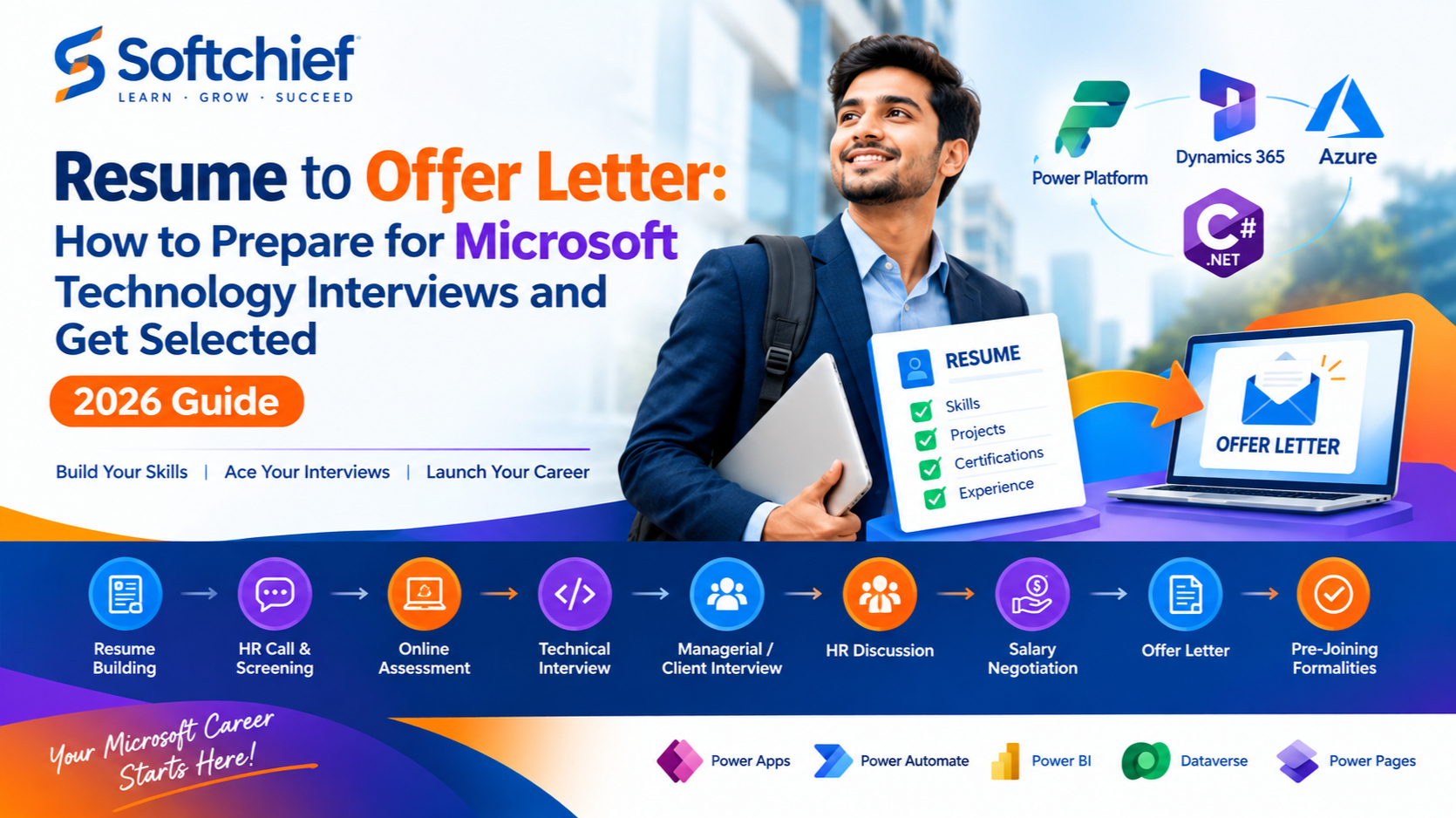
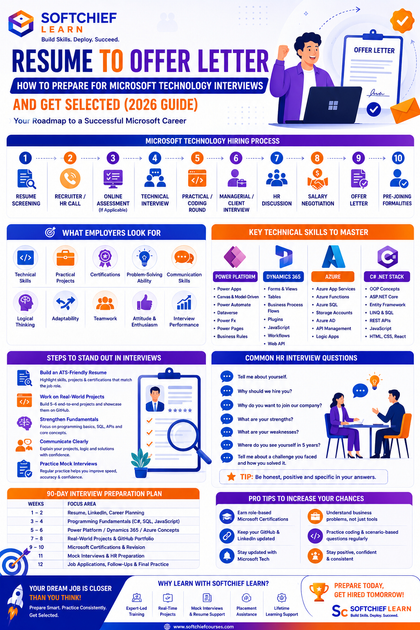
A typical hiring journey looks like this:
- Resume Screening
- Recruiter or HR Call
- Online Assessment (if applicable)
- Technical Interview
- Practical or Coding Round
- Managerial or Client Interview
- HR Discussion
- Salary Negotiation
- Offer Letter
- Pre-Joining Formalities
Each stage evaluates different aspects of your profile, so preparation should be holistic rather than focused only on technical questions.
Step 1: Build an ATS-Friendly Resume
Your resume is your first opportunity to make an impression.
Recruiters often spend less than a minute reviewing a resume before deciding whether to shortlist a candidate.
What Your Resume Should Include
Professional Summary
Write a concise summary highlighting:
- Core technical skills
- Certifications
- Projects
- Career objective
Example:
Microsoft Power Platform Developer with hands-on experience in Power Apps, Power Automate, Dataverse, and C#. Passionate about building enterprise business applications and continuously learning Microsoft technologies.
Technical Skills
Organize skills into categories.
Example:
Programming
- C#
- JavaScript
- SQL
Microsoft Technologies
- Power Apps
- Power Automate
- Power BI
- Power Pages
- Dynamics 365
- Azure
Tools
- Git
- Visual Studio
- Azure DevOps
- Postman
Projects
Projects often carry more weight than certifications.
Include:
- Business problem
- Technologies used
- Your responsibilities
- Key achievements
Certifications
Mention Microsoft certifications such as:
- PL-900
- PL-400
- PL-200
- AZ-900
- AZ-204
Recruiters use certifications as indicators of commitment and foundational knowledge.
Step 2: Build Projects That Impress Recruiters
Companies prefer candidates who can demonstrate practical problem-solving.
Recommended project ideas include:
- Employee Leave Management System
- CRM Solution
- Sales Automation App
- Customer Support Portal
- Inventory Management System
- HR Recruitment Application
- Approval Workflow Automation
- Expense Management System
- Service Request Portal
If you’re targeting Microsoft roles, combine technologies such as:
- Power Apps
- Power Automate
- Dataverse
- Power Pages
- Azure Functions
- C#
- REST APIs
The ability to explain design decisions and business value during interviews is just as important as building the project.
Step 3: Create a Strong LinkedIn Profile
Recruiters frequently review LinkedIn before scheduling interviews.
Your profile should include:
- Professional headline
- About section
- Skills
- Certifications
- Projects
- Portfolio links
- GitHub repository
- Recommendations (if available)
Stay active by sharing learning milestones and engaging with Microsoft technology communities.
Step 4: Understand the Technical Skills Recruiters Expect
Different roles require different expertise.
Power Platform Roles
Prepare for topics such as:
- Power Apps
- Canvas Apps
- Model-Driven Apps
- Power Automate
- Dataverse
- Power Fx
- Business Rules
- Security Roles
- Connectors
- Power Pages
Dynamics 365 Roles
Focus on:
- Forms
- Views
- Tables
- Business Process Flows
- Plugins
- JavaScript
- Ribbon Customization
- Workflows
- Solution Management
- Web API
Azure Roles
Prepare for:
- Azure App Services
- Azure Functions
- Storage Accounts
- Azure SQL
- Azure Active Directory
- API Management
- Logic Apps
- Key Vault
- Authentication
C# Full Stack Roles
Common interview topics include:
- Object-Oriented Programming
- ASP.NET Core
- Entity Framework
- LINQ
- REST APIs
- Dependency Injection
- SQL Server
- JavaScript
- HTML & CSS
- React or Angular (depending on role)
Step 5: Strengthen Programming Fundamentals
Even for low-code platforms, coding knowledge remains valuable.
Focus on:
- Object-Oriented Programming
- Exception Handling
- Collections
- LINQ
- Async Programming
- SQL Queries
- Database Design
- API Integration
Strong fundamentals help you answer scenario-based questions confidently.
Step 6: Prepare for Scenario-Based Questions
Modern interviews emphasize problem-solving over memorization.
Examples include:
- How would you automate a manual approval process?
- How would you secure sensitive customer data?
- How would you optimize a slow-performing application?
- How would you integrate two enterprise systems?
Interviewers want to understand your thought process, not just your final answer.
Step 7: Practice Explaining Your Projects
Recruiters often spend significant time discussing your projects.
Be prepared to explain:
- Why you built the project
- Technologies used
- Business problem solved
- Challenges faced
- Design decisions
- Improvements you would make
Confident project discussions demonstrate practical experience.
Step 8: Prepare for Coding Assessments
Some companies include coding rounds.
Practice:
- Arrays
- Strings
- Loops
- Recursion
- SQL Queries
- Basic Algorithms
- Object-Oriented Programming
Consistency matters more than solving advanced competitive programming problems for many enterprise roles.
Step 9: Improve Communication Skills
Technical knowledge alone is not enough.
Employers value professionals who can:
- Explain technical concepts clearly
- Understand business requirements
- Collaborate with teams
- Communicate with clients
- Present solutions professionally
Practice mock interviews to improve fluency and confidence.
Step 10: Prepare for HR Interviews
Common HR questions include:
Tell me about yourself.
Create a structured response covering:
- Education
- Skills
- Projects
- Career goals
Why should we hire you?
Highlight:
- Technical strengths
- Learning ability
- Teamwork
- Enthusiasm
- Practical experience
Why do you want to join our company?
Research the company beforehand.
Mention:
- Products
- Technologies
- Growth opportunities
- Company values
Avoid generic responses.
What are your strengths?
Choose strengths supported by examples.
Examples:
- Quick learner
- Problem solver
- Team player
- Adaptable
- Self-motivated
What are your weaknesses?
Mention a genuine improvement area along with steps you’re taking to overcome it.
Step 11: Research the Company
Before every interview:
Learn about:
- Company services
- Clients
- Technology stack
- Products
- Recent achievements
- Work culture
This preparation helps you answer questions more effectively and ask meaningful questions at the end of the interview.
Step 12: Ask Smart Questions
At the end of the interview, consider asking:
- What technologies will I work with?
- What does success look like in this role?
- What learning opportunities does the company provide?
- How is the team structured?
Thoughtful questions show genuine interest.
Step 13: Follow Up Professionally
Within 24 hours of your interview:
- Send a thank-you email if appropriate
- Reiterate your interest
- Mention one or two points discussed during the interview
- Keep the message concise and professional
A courteous follow-up can leave a positive impression.
Common Reasons Candidates Get Rejected
Avoid these common mistakes:
- Weak resume
- No practical projects
- Poor communication
- Memorized answers without understanding
- Inability to explain projects
- Lack of confidence
- Poor knowledge of fundamentals
- Arriving unprepared
- Negative attitude
Every interview is an opportunity to improve.
Tips to Increase Your Selection Chances
- Build at least 5–6 real-world projects.
- Earn role-based Microsoft certifications.
- Practice mock interviews regularly.
- Maintain an updated GitHub portfolio.
- Optimize your LinkedIn profile.
- Stay informed about Microsoft technology updates.
- Focus on understanding concepts instead of memorizing answers.
- Be honest about your skills and experience.
Suggested 90-Day Interview Preparation Plan
| Week | Focus Area |
|---|---|
| 1–2 | Resume, LinkedIn, Career Planning |
| 3–4 | Programming Fundamentals (C#, SQL, JavaScript) |
| 5–6 | Power Platform / Dynamics 365 / Azure Concepts |
| 7–8 | Real-World Projects and GitHub Portfolio |
| 9–10 | Microsoft Certifications and Revision |
| 11 | Mock Interviews and HR Preparation |
| 12 | Job Applications, Follow-Ups, and Final Practice |
Career Opportunities After Preparation
Strong preparation can open doors to roles such as:
- Power Platform Developer
- Dynamics 365 Developer
- Dynamics 365 Functional Consultant
- Azure Developer
- Azure Administrator
- C# .NET Full Stack Developer
- Microsoft Consultant
- Technical Consultant
- Solution Consultant
- Cloud Engineer
- Business Applications Developer
These roles are in demand across consulting firms, IT services, product companies, and enterprise organizations.
Thoughts
Receiving an offer letter is not the result of luck—it is the outcome of consistent preparation, continuous learning, and the ability to demonstrate value during every stage of the hiring process.
A strong resume may get you shortlisted, but practical projects, technical expertise, communication skills, and professionalism are what ultimately earn job offers. Focus on building real-world solutions, mastering Microsoft technologies, staying updated with industry trends, and preparing for interviews with confidence.
Every interview is an opportunity to learn, improve, and move one step closer to your dream role.
Why Learn Microsoft Technologies with Softchief Learn?
At Softchief Learn, we help students, freshers, and working professionals build successful careers in the Microsoft ecosystem through expert-led, industry-oriented training.
Our programs include:
- Microsoft Power Platform
- Microsoft Dynamics 365 CE
- Microsoft Azure
- C# .NET Full Stack Development
- Real-Time Industry Projects
- Resume Building Workshops
- Mock Technical Interviews
- Placement Assistance
- Lifetime Learning Resources
Whether you’re preparing for your first interview or aiming for a career transition, our structured learning approach helps you gain practical skills that employers value.
Conclusion
The journey from resume to offer letter requires more than technical knowledge—it demands preparation, persistence, and a commitment to continuous improvement. By building a strong portfolio, earning relevant Microsoft certifications, mastering interview fundamentals, and developing effective communication skills, you can significantly improve your chances of getting selected.
Whether your goal is to become a Power Platform Developer, Dynamics 365 Consultant, Azure Developer, or C# .NET Full Stack Engineer, the right preparation strategy can help you stand out in today’s competitive job market. Invest in your skills, practice consistently, and approach every interview as an opportunity to showcase your potential.