
How to Build a ₹10+ LPA Career in Microsoft Technologies: Skills, Certifications & Roadmap
Introduction
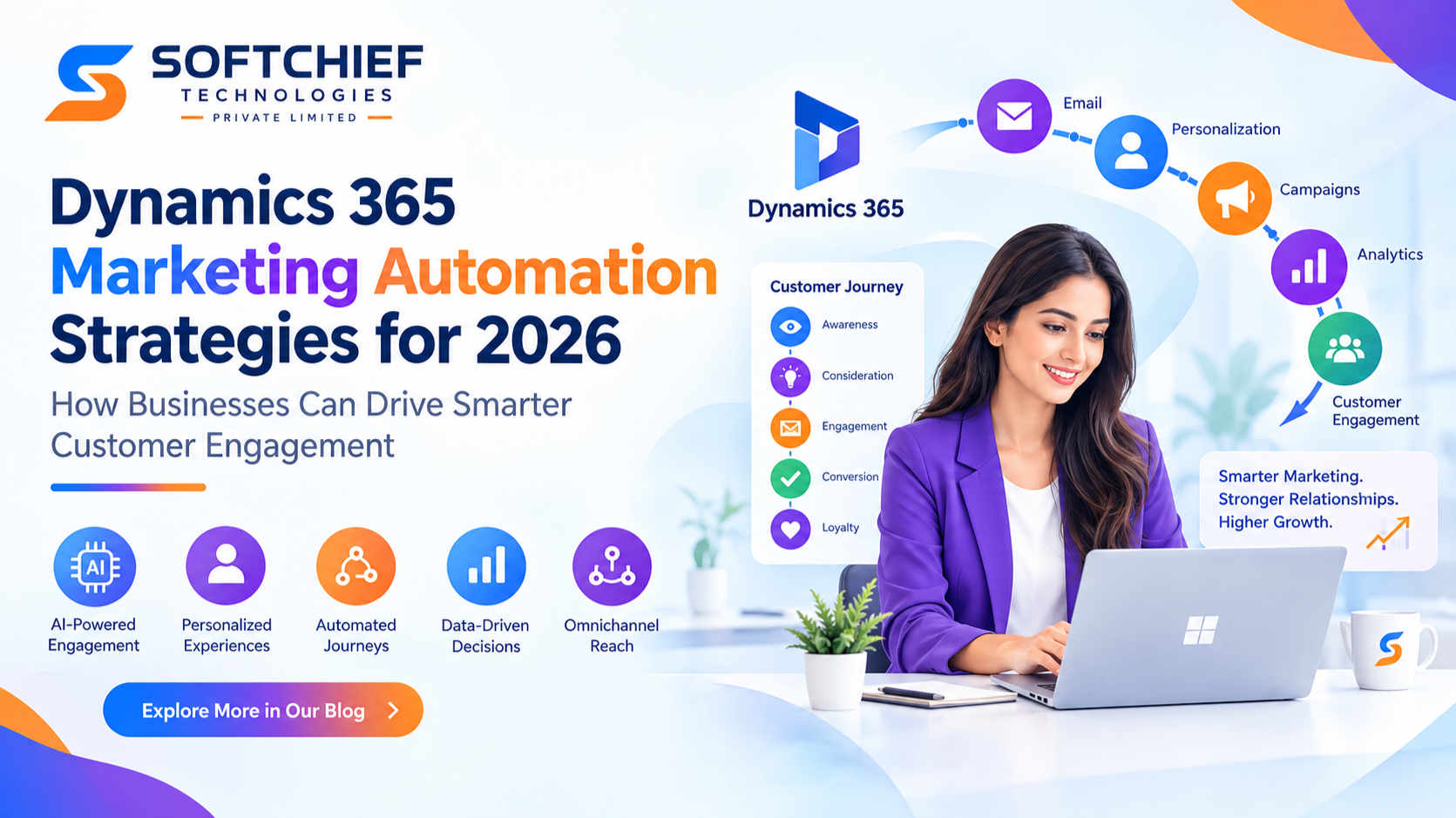
Customer expectations are changing faster than ever. Businesses today are no longer competing only on products or pricing; they are competing on customer experience, personalization and speed of engagement.
Traditional marketing campaigns based on generic emails, manual follow-ups and broad customer segmentation are no longer enough. Modern organisations need intelligent marketing platforms that can understand customer behaviour, predict needs and deliver personalized experiences across multiple channels.
Microsoft Dynamics 365 provides a powerful ecosystem for achieving this through Dynamics 365 Customer Insights – Journeys and its marketing automation capabilities.
In 2026, successful businesses will increasingly rely on:
- AI-powered customer engagement
- Real-time personalization
- Predictive analytics
- Automated customer journeys
- Omnichannel communication
- Data-driven marketing decisions
This article explores the most effective Dynamics 365 Marketing Automation strategies for 2026 and explains how organisations can use Microsoft technologies to create smarter, more connected customer experiences.
What is Dynamics 365 Marketing Automation?
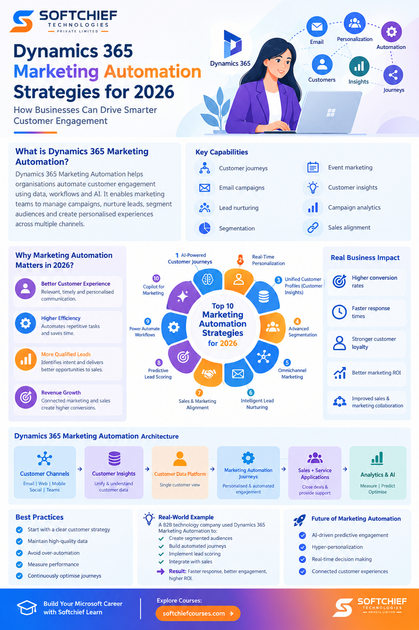
Dynamics 365 Marketing Automation enables organisations to automate customer engagement activities using data, workflows and artificial intelligence.
It helps marketing teams manage:
- Customer journeys
- Email campaigns
- Lead nurturing
- Segmentation
- Event marketing
- Customer insights
- Campaign analytics
- Sales alignment
Instead of manually managing every interaction, businesses can create automated experiences that respond to customer behaviour.
Example:
A customer downloads a product guide:
↓
Dynamics 365 identifies customer interest
↓
Automated email journey starts
↓
Customer receives relevant content
↓
Sales team receives qualified lead notification
Why Marketing Automation Matters in 2026
The marketing landscape is becoming increasingly complex.
Businesses must manage:
- Multiple customer channels
- Large volumes of customer data
- Increasing personalization expectations
- Shorter buying cycles
- Growing competition
Marketing automation helps organisations:
Improve Customer Experience
Customers receive relevant communication based on their interests and behaviour.
Increase Marketing Efficiency
Automation reduces repetitive tasks and allows marketing teams to focus on strategy and creativity.
Generate Higher Quality Leads
Marketing teams can identify customer intent and deliver better-qualified opportunities to sales teams.
Improve Revenue Growth
Connected marketing and sales processes create better conversion opportunities.
Key Dynamics 365 Marketing Automation Strategies for 2026
1. AI-Powered Customer Journeys
Artificial Intelligence will become one of the biggest drivers of marketing automation in 2026.
Dynamics 365 uses AI capabilities to help organisations understand customer behaviour and optimise engagement.
Traditional approach:
Create Campaign
      |
Send Email
      |
Measure Results
AI-driven approach:
Analyse Customer Behaviour

      |

Predict Customer Intent

      |

Personalised Engagement

      |

Continuous Optimisation
How AI Improves Customer Journeys
AI can help marketers:
- Predict customer interests
- Recommend next best actions
- Identify high-value prospects
- Improve campaign timing
- Generate content suggestions
Example:
A customer frequently views enterprise software content.
AI identifies buying intent and automatically moves the customer into a high-value nurture journey.
2. Real-Time Personalization Using Customer Data
Customers expect brands to understand their needs.
Generic marketing messages are becoming less effective.
Dynamics 365 enables businesses to create personalised experiences using unified customer profiles.
Customer data can include:
- Website activity
- Purchase history
- Email engagement
- Service interactions
- Sales conversations
- Social interactions
Example:
Instead of sending:
“Check out our latest products”
A personalised message becomes:
“Based on your previous purchases, here are solutions that can improve your current workflow.”
3. Unified Customer Profiles with Dynamics 365 Customer Insights
One of the biggest challenges organisations face is fragmented customer data.
Customer information may exist across:
- CRM systems
- ERP platforms
- Websites
- Marketing platforms
- Support applications
Dynamics 365 Customer Insights helps unify customer data into a single view.
Example:
Before:
Sales Data
Customer Service Data
Marketing Data
Website Data

(Separate systems)
After:
        Unified Customer Profile

                 |

Complete Customer Understanding
Benefits:
- Better segmentation
- More accurate targeting
- Improved customer experience
4. Advanced Customer Segmentation
Successful marketing depends on reaching the right audience.
In 2026, businesses will move beyond basic segmentation.
Traditional segmentation:
- Location
- Industry
- Customer type
Advanced segmentation:
- Behaviour patterns
- Engagement level
- Purchase probability
- Customer lifecycle stage
- Predicted interests
Example:
Instead of targeting:
“All existing customers”
Create segments:
- Customers likely to upgrade
- Customers at risk of leaving
- High-value customers
- New customers requiring onboarding
5. Omnichannel Marketing Automation
Customers interact through multiple channels:
- SMS
- Websites
- Mobile apps
- Social platforms
- Microsoft Teams
Modern marketing strategies require consistent communication across channels.
Example Customer Journey:
Website Visit

↓

Email Follow-up

↓

SMS Reminder

↓

Sales Outreach

↓

Customer Conversion
Dynamics 365 helps organisations orchestrate these interactions from a central platform.
6. Intelligent Lead Nurturing Automation
Not every lead is ready to buy immediately.
Successful organisations create structured nurturing journeys.
Example:
A potential customer downloads an industry report.
Automation:
Day 1:
- Send resource confirmation
Day 5:
- Share related case study
Day 10:
- Invite to webinar
Day 20:
- Offer consultation
Day 30:
- Notify sales team
This approach builds trust and improves conversion rates.
7. Sales and Marketing Alignment
One of the biggest challenges in organisations is the disconnect between marketing and sales teams.
Dynamics 365 helps create a connected process.
Marketing Team:
- Generates leads
- Scores engagement
- Creates campaigns
Sales Team:
- Receives qualified opportunities
- Tracks customer interactions
- Closes deals
Example:
Marketing Activity

       |

Lead Qualification

       |

Sales Opportunity

       |

Customer Conversion
8. Predictive Lead Scoring
Lead scoring helps businesses identify which prospects are most likely to convert.
Traditional scoring:
- Email opened
- Form submitted
- Website visit
AI-powered scoring:
- Buying behaviour
- Engagement patterns
- Historical conversion data
- Customer similarity
Example:
Lead A:
- Opened one email
- No website activity
Lead B:
- Downloaded multiple resources
- Attended webinar
- Viewed pricing page
AI identifies Lead B as higher priority.
9. Marketing Automation with Power Automate
Dynamics 365 integrates with Power Automate to create powerful workflows.
Examples:
New Lead Automation
When a new lead enters CRM:
↓
Assign salesperson
↓
Send welcome email
↓
Create follow-up task
Customer Retention Automation
When customer engagement decreases:
↓
Trigger retention campaign
↓
Notify account manager
↓
Offer personalised solution
10. Using Copilot for Marketing Productivity
AI assistants are becoming an important part of marketing operations.
Microsoft Copilot capabilities help teams:
- Generate email content
- Create campaign ideas
- Summarise customer insights
- Analyse engagement data
- Improve productivity
Example:
A marketer can ask:
“Create a customer journey for new enterprise customers.”
AI can suggest:
- Email sequence
- Audience segment
- Messaging approach
- Follow-up actions
Dynamics 365 Marketing Automation Architecture
A modern enterprise marketing architecture:
Customer Channels

        |

Dynamics 365 Customer Insights

        |

Customer Data Platform

        |

Marketing Automation Journeys

        |

Sales + Service Applications

        |

Analytics and AI Insights
Real-World Example: B2B Technology Company
Business Challenge
A software company struggled with:
- Low lead conversion
- Manual follow-ups
- Poor customer visibility
Solution Using Dynamics 365 Automation
Implemented:
Customer Segmentation
Created segments based on:
- Industry
- Company size
- Engagement
Automated Journeys
Built campaigns for:
- New prospects
- Existing customers
- Trial users
Lead Scoring
Used engagement signals to prioritise leads.
Sales Integration
Automatically transferred qualified leads to sales.
Results:
- Faster lead response
- Improved customer engagement
- Better marketing ROI
- Stronger sales collaboration
Best Practices for Dynamics 365 Marketing Automation
1. Start With Customer Strategy
Technology should support business goals.
Define:
- Target audience
- Customer journey
- Success metrics
2. Maintain High-Quality Data
Automation depends on accurate data.
Implement:
- Data cleansing
- Duplicate management
- Standardised fields
3. Avoid Over-Automation
Automation should improve relationships, not make communication feel robotic.
Maintain:
- Human messaging
- Relevant timing
- Personalisation
4. Measure Campaign Performance
Track:
- Engagement rate
- Conversion rate
- Customer acquisition cost
- Revenue impact
5. Continuously Optimise Journeys
Marketing automation is not a one-time setup.
Regularly analyse:
- Customer behaviour
- Campaign performance
- Market changes
Common Mistakes Businesses Should Avoid
❌ Sending the same message to all customers
❌ Ignoring customer data quality
❌ Creating complex journeys without clear goals
❌ Failing to connect marketing and sales
❌ Measuring only email opens instead of business outcomes
❌ Not using AI capabilities effectively
Future of Dynamics 365 Marketing Automation
The future of marketing automation will be driven by:
Artificial Intelligence
AI will enable:
- Predictive customer engagement
- Automated content generation
- Intelligent recommendations
Hyper-Personalization
Businesses will move from customer segments to individual experiences.
Real-Time Decision Making
Marketing systems will respond instantly to customer behaviour.
Connected Customer Experiences
Marketing, sales and service will operate as one unified customer experience platform.
Conclusion
Dynamics 365 Marketing Automation provides organisations with the tools required to create intelligent, personalised and scalable customer engagement strategies.
In 2026, businesses that succeed will not simply send more marketing messages. They will create meaningful customer experiences powered by data, automation and artificial intelligence.
By leveraging Dynamics 365 Customer Insights, AI capabilities, automated customer journeys, predictive analytics and integrated sales processes, organisations can improve customer relationships and accelerate business growth.
For Dynamics 365 consultants, marketers and business leaders, mastering marketing automation strategies is essential for building the next generation of customer-centric enterprises.