
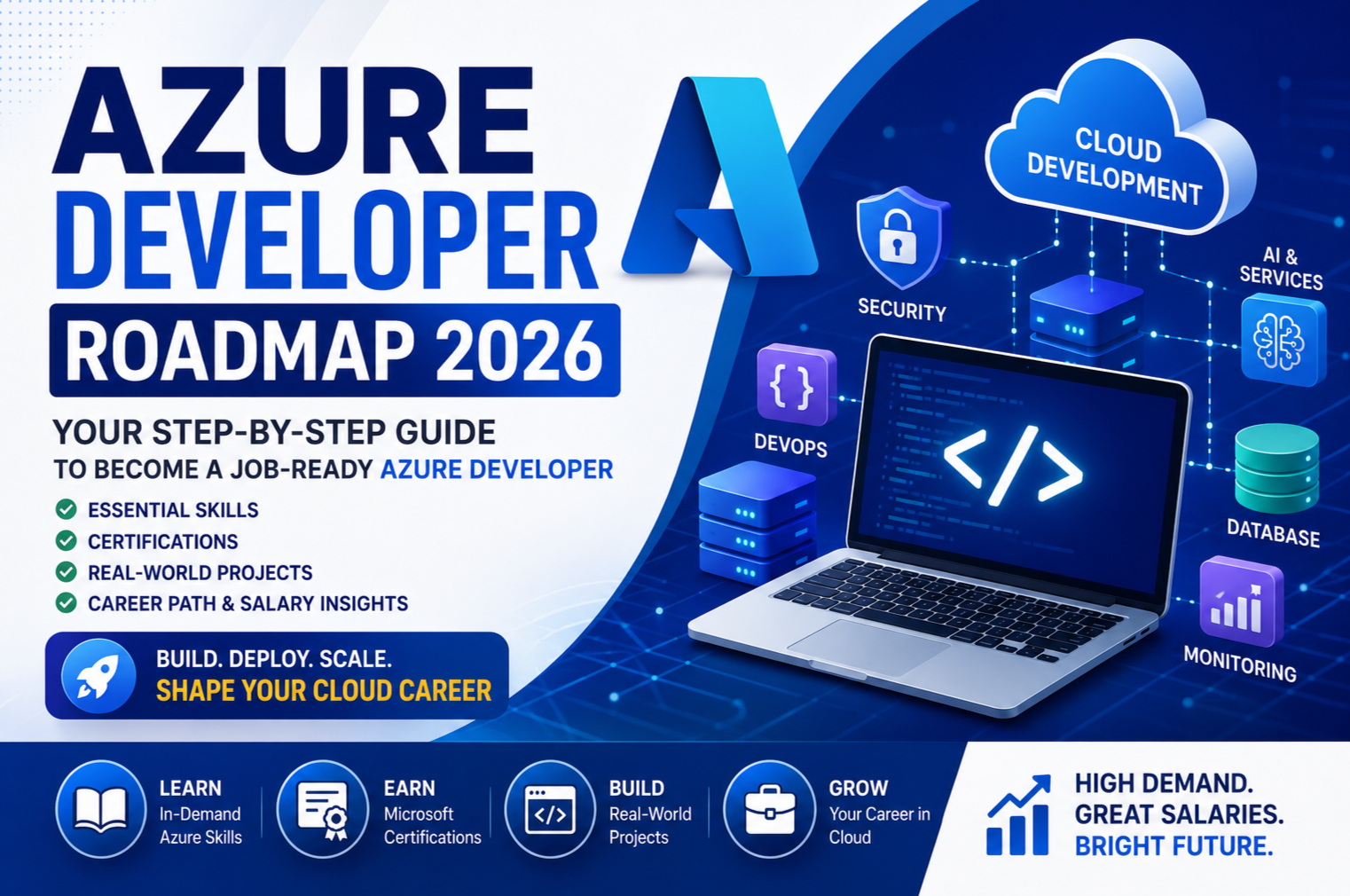
Azure Developer Roadmap 2026: Skills, Certifications, Projects, and Career Path
Introduction
Cloud computing has become the backbone of modern software development, and Microsoft Azure is one of the world’s leading cloud platforms. From startups to Fortune 500 companies, organizations rely on Azure to build, deploy, secure, and scale applications that serve millions of users every day.
With the rapid adoption of Artificial Intelligence (AI), cloud-native applications, serverless computing, containers, and enterprise integration, the demand for skilled Azure Developers continues to grow in 2026.
If you’re a B.Tech or MCA graduate, software developer, C#/.NET developer, or someone looking to transition into cloud computing, becoming an Azure Developer can open the door to exciting career opportunities.
This roadmap will guide you through:
- What an Azure Developer does
- Essential skills to learn
- Azure services you should master
- Microsoft certifications
- Real-world projects
- Career opportunities
- AI and cloud trends
- Interview preparation
- Step-by-step learning roadmap
By the end of this guide, you’ll have a clear plan to become a job-ready Azure Developer.
What Is Microsoft Azure?
Microsoft Azure is a cloud computing platform that enables organizations to build, deploy, manage, and scale applications using Microsoft’s global network of data centers.
Azure provides hundreds of cloud services across:
- Application Development
- Artificial Intelligence
- Data Analytics
- Storage
- Databases
- Networking
- Security
- DevOps
- IoT
- Containers
- Machine Learning
Whether you’re building a simple web application or an enterprise-grade AI solution, Azure offers the infrastructure and services needed to support it.
Who Is an Azure Developer?
An Azure Developer designs, develops, deploys, and maintains cloud applications using Azure services and development tools.
Unlike traditional software developers who focus only on writing code, Azure Developers also understand cloud architecture, security, deployment automation, monitoring, and scalability.
Typical responsibilities include:
- Building cloud-native applications
- Developing REST APIs
- Deploying applications to Azure
- Creating serverless solutions
- Integrating Azure AI services
- Working with Azure DevOps pipelines
- Managing cloud storage and databases
- Monitoring application performance
- Implementing security best practices
Azure Developers bridge application development with cloud infrastructure.
Why Choose Azure Development in 2026?
Cloud adoption continues to accelerate across industries, making Azure one of the most valuable technology skills to learn.
Strong Enterprise Adoption
Azure is widely used by organizations in banking, healthcare, retail, manufacturing, education, logistics, and government.
Many businesses that already use Microsoft 365, Dynamics 365, and Power Platform choose Azure because of its seamless integration with the Microsoft ecosystem.
Excellent Career Growth
Azure Developers are in demand for roles involving cloud migration, modern application development, DevOps, AI integration, and enterprise architecture.
As your experience grows, you can progress into senior developer, cloud architect, DevOps engineer, or technical lead roles.
AI-Driven Future
Microsoft continues to invest heavily in AI through:
- Azure OpenAI Service
- Azure AI Services
- Azure Machine Learning
- Azure AI Foundry
- Microsoft Copilot technologies
Understanding Azure alongside AI significantly enhances your long-term career prospects.
Global Opportunities
Azure certifications and experience are recognized worldwide, enabling opportunities with Microsoft partners, consulting firms, product companies, startups, and remote-first organizations.
Skills Required to Become an Azure Developer
Becoming an Azure Developer requires more than learning Azure services. You need a combination of programming, cloud, and DevOps skills.
1. Programming Fundamentals
Start with a strong programming foundation.
Recommended languages:
- C#
- .NET
- ASP.NET Core
- JavaScript
- TypeScript
- Python (optional but useful for AI and automation)
Understanding object-oriented programming, asynchronous programming, and API development will make learning Azure much easier.
2. Web Development
Azure Developers frequently build and host web applications.
Essential topics include:
- ASP.NET Core MVC
- Web APIs
- RESTful services
- Authentication
- Authorization
- JWT
- OAuth
- OpenID Connect
3. Azure Fundamentals
Before diving into advanced services, understand:
- Azure Regions
- Resource Groups
- Subscriptions
- Management Groups
- Azure Portal
- Azure CLI
- Azure PowerShell
- Cost Management
These concepts form the foundation of Azure administration and development.
4. Compute Services
Azure provides multiple ways to host applications.
Learn:
Azure App Service
Deploy web applications quickly without managing servers.
Azure Virtual Machines
Host applications with full operating system control.
Azure Functions
Build serverless applications that execute code on demand.
Azure Container Apps
Deploy microservices without managing Kubernetes infrastructure.
Azure Kubernetes Service (AKS)
Run containerized applications at enterprise scale.
5. Azure Storage
Understanding cloud storage is essential.
Learn:
- Blob Storage
- File Storage
- Queue Storage
- Table Storage
- Data Lake Storage
Know when to use each service based on application requirements.
6. Azure Databases
Modern applications use multiple database technologies.
Important services include:
- Azure SQL Database
- Azure Cosmos DB
- Azure Database for PostgreSQL
- Azure Database for MySQL
Learn indexing, performance tuning, security, and backup strategies.
7. Identity and Security
Security is a core responsibility of Azure Developers.
Key topics:
- Microsoft Entra ID (formerly Azure AD)
- Managed Identities
- Role-Based Access Control (RBAC)
- Azure Key Vault
- Secrets Management
- Conditional Access
- Authentication and Authorization
8. Messaging and Integration
Enterprise applications often communicate through messaging services.
Learn:
- Azure Service Bus
- Event Grid
- Event Hubs
- Logic Apps
- API Management
These services help build scalable and loosely coupled applications.
9. DevOps and CI/CD
Modern development teams rely on automation.
Understand:
- Git
- GitHub
- Azure Repos
- Azure Pipelines
- Build Pipelines
- Release Pipelines
- Continuous Integration
- Continuous Deployment
Knowing how to automate deployments is a key skill for Azure Developers.
10. Monitoring and Diagnostics
After deployment, applications must be monitored.
Learn:
- Azure Monitor
- Application Insights
- Log Analytics
- Alerts
- Diagnostic Logs
Monitoring helps identify issues before they impact users.
AI Skills Every Azure Developer Should Learn
AI is now an integral part of cloud application development.
Recommended topics:
- Azure OpenAI Service
- Azure AI Services
- Azure AI Foundry
- Azure AI Search
- Azure Machine Learning basics
- Copilot integration
- Prompt engineering fundamentals
Developers who combine cloud expertise with AI skills are well-positioned for future opportunities.
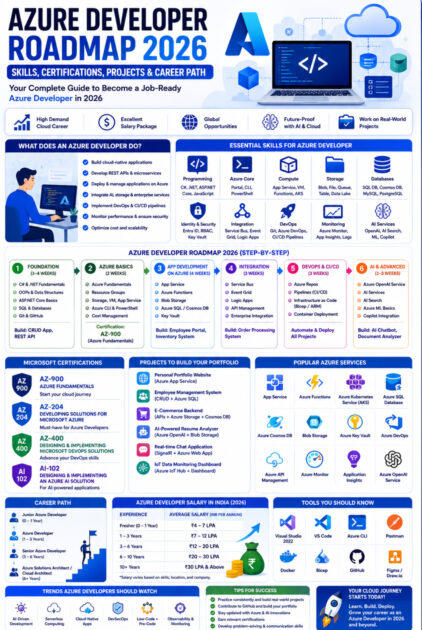
Complete Azure Developer Learning Roadmap
Phase 1: Programming Fundamentals (3–4 Weeks)
Learn:
- C#
- .NET
- ASP.NET Core
- SQL
- Git
Build:
- CRUD Web Application
- REST API
- Authentication Module
Phase 2: Azure Fundamentals (2 Weeks)
Topics:
- Azure Portal
- Resource Groups
- Storage
- Virtual Machines
- App Services
- Azure CLI
Certification:
- AZ-900 (Azure Fundamentals)
Phase 3: Azure Application Development (4 Weeks)
Learn:
- Azure App Service
- Azure Functions
- Blob Storage
- Azure SQL
- Azure Key Vault
Projects:
- File Upload Portal
- Employee Management System
- Inventory Management Application
Phase 4: Cloud Integration (3 Weeks)
Topics:
- Service Bus
- Event Grid
- Logic Apps
- API Management
Project:
Build an event-driven order processing system.
Phase 5: Azure DevOps (3 Weeks)
Learn:
- Git
- Azure Repos
- Pipelines
- CI/CD
- Infrastructure as Code (Bicep or ARM Templates)
Deploy all your projects using automated pipelines.
Phase 6: AI Integration (2–3 Weeks)
Explore:
- Azure OpenAI
- AI Services
- Copilot APIs
- AI Search
Build an AI-powered chatbot or document summarization tool.
Recommended Microsoft Certifications
Certifications validate your expertise and can strengthen your resume.
Beginner
- AZ-900: Microsoft Azure Fundamentals
Developer
- AZ-204: Developing Solutions for Microsoft Azure
DevOps
- AZ-400: Designing and Implementing Microsoft DevOps Solutions
AI
- AI-102: Designing and Implementing an Azure AI Solution
Remember, certifications complement practical experience—they do not replace it.
Projects Every Azure Developer Should Build
A strong portfolio demonstrates your ability to solve real-world problems.
Beginner Projects
- Personal Portfolio Website on Azure
- Employee Management System
- Blog Platform
- Task Management Application
Intermediate Projects
- E-commerce Backend
- Image Upload and Processing System
- Online Appointment Booking
- Expense Management Application
Advanced Projects
- AI-powered Resume Analyzer
- Microservices-based Order Processing System
- IoT Dashboard
- Enterprise CRM Integration
- Real-time Chat Application
- Cloud-based Learning Management System
Document each project with architecture diagrams, deployment steps, and technical decisions.
Soft Skills That Employers Value
Technical expertise is important, but successful Azure Developers also possess:
- Problem-solving abilities
- Communication skills
- Analytical thinking
- Team collaboration
- Time management
- Adaptability
- Documentation skills
- Customer-focused mindset
These skills help you thrive in enterprise development environments.
Common Azure Developer Interview Questions
Be prepared to answer questions such as:
- What is Azure App Service?
- Explain Azure Functions.
- Difference between Azure Functions and WebJobs?
- What is Azure Storage?
- What is Cosmos DB?
- Explain Managed Identities.
- What is Azure Key Vault?
- Difference between Service Bus and Event Grid?
- Explain CI/CD.
- What is Azure Monitor?
- How would you secure an Azure application?
- How do you optimize application performance in Azure?
Support your answers with examples from projects you’ve completed.
Career Path
Your Azure career can evolve in several directions.
Entry Level
- Azure Developer
- Junior Cloud Developer
- .NET Azure Developer
Mid-Level
- Cloud Engineer
- Senior Azure Developer
- Integration Developer
- Technical Consultant
Advanced
- Cloud Solution Architect
- Azure Architect
- DevOps Engineer
- Technical Lead
- Engineering Manager
The combination of Azure expertise, software development, and AI knowledge provides excellent long-term career flexibility.
Common Mistakes Beginners Make
Avoid these common pitfalls:
- Focusing only on certifications without building projects.
- Ignoring networking and cloud fundamentals.
- Skipping Git and DevOps practices.
- Neglecting security best practices.
- Not learning monitoring and diagnostics.
- Avoiding hands-on deployment.
- Failing to understand cost optimization in Azure.
Practical experience is the key differentiator during interviews.
Why Learn Azure with Softchief Learn?
At Softchief Learn, we believe that the best way to master Azure is through real-world implementation.
Our Azure training includes:
- Live instructor-led sessions
- Lifetime access to recordings
- Hands-on cloud projects
- Real-world case studies
- Azure DevOps implementation
- AI integration examples
- Resume preparation
- Mock interviews
- Placement assistance
- Community support
- Curriculum updated with the latest Azure and AI technologies
Our focus is on preparing learners for enterprise cloud development, not just helping them pass certification exams.
Conclusion
Microsoft Azure continues to be one of the most powerful cloud platforms for building modern, secure, and scalable applications. As organizations embrace AI, cloud-native architectures, automation, and digital transformation, the demand for skilled Azure Developers is expected to remain strong.
Success in this field requires more than learning individual Azure services. Build a solid foundation in programming, understand cloud concepts, master Azure development, learn DevOps practices, integrate AI capabilities, and create meaningful projects that showcase your skills.
Follow this roadmap step by step, stay curious, practice consistently, and invest in continuous learning. With the right mindset and practical experience, you can build a successful career as an Azure Developer in 2026 and beyond.