Live Training vs Self-Paced Learning: Which Learning Method is Better for Your IT Career?
Introduction
The rapid growth of online education has transformed the way professionals learn technical skills. Whether you’re planning to become a Dynamics 365 Developer, Power Platform Developer, Azure Engineer, C# Full Stack Developer, or Cloud Consultant, one important question remains:
Should you choose Live Instructor-Led Training or Self-Paced Learning?
Both learning methods have their advantages. Some learners thrive with structured guidance and real-time interaction, while others prefer the flexibility of learning at their own pace.
The right choice depends on your career goals, learning style, available time, and the level of support you need.
In this comprehensive guide, we’ll compare Live Training vs Self-Paced Learning across multiple factors to help you make the best decision for your career in 2026.
What is Live Training?
Live Training is an instructor-led learning experience where students attend scheduled classes conducted by industry experts.
Sessions typically include:
- Live online classes
- Real-time interaction
- Question-and-answer sessions
- Hands-on demonstrations
- Practical assignments
- Project discussions
- Mentorship
- Doubt clarification
Students learn alongside other participants, creating an interactive classroom experience similar to traditional training but delivered online.
What is Self-Paced Learning?
Self-Paced Learning provides pre-recorded video lessons and learning materials that students can access anytime.
Learners study independently and decide:
- When to learn
- How fast to progress
- Which topics to revisit
- How often to practice
This approach offers maximum flexibility, making it popular among working professionals and learners with unpredictable schedules.
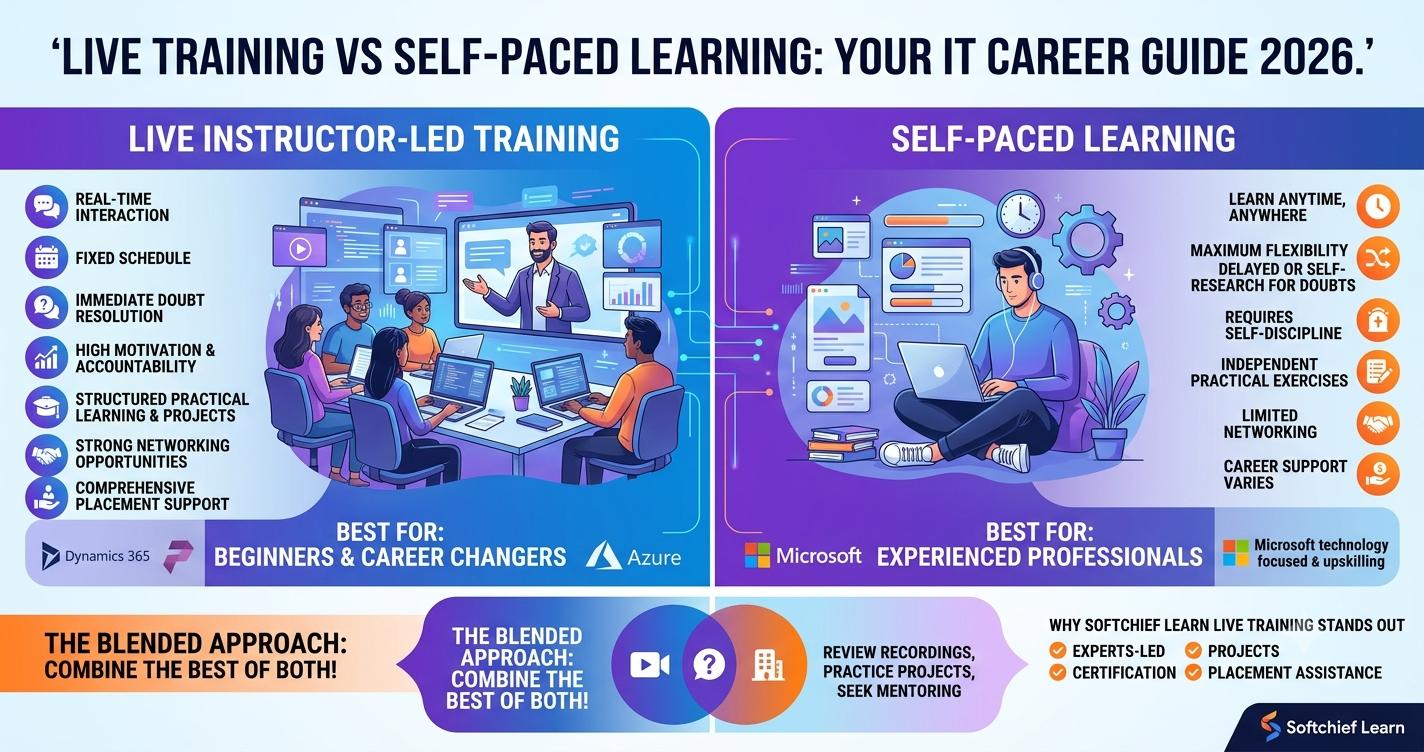
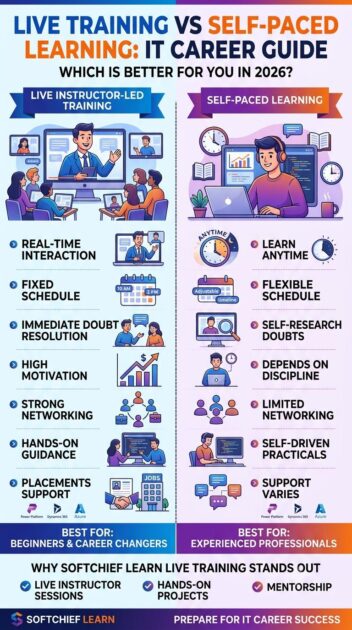
Live Training vs Self-Paced Learning: Quick Comparison
| Feature | Live Training | Self-Paced Learning |
|---|---|---|
| Instructor Interaction | ✅ Real-Time | ❌ Limited |
| Fixed Schedule | ✅ Yes | ❌ No |
| Learn Anytime | ❌ No | ✅ Yes |
| Doubt Resolution | Immediate | Delayed or Self-Research |
| Motivation | High | Depends on Self-Discipline |
| Networking | Strong | Limited |
| Hands-on Guidance | Excellent | Self-Driven |
| Placement Support | Usually Comprehensive | Varies by Provider |
| Flexibility | Moderate | Excellent |
| Best For | Beginners & Career Changers | Experienced Professionals |
Learning Experience
Live Training
In a live classroom, instructors explain concepts, demonstrate practical scenarios, answer questions, and provide immediate feedback.
Benefits include:
- Interactive discussions
- Real-time troubleshooting
- Personalized explanations
- Group learning
- Better accountability
- Structured curriculum
This environment helps learners stay engaged and maintain consistent progress.
Self-Paced Learning
Students learn independently using recorded videos, documentation, and exercises.
Advantages include:
- Learn at your own speed
- Pause and replay lessons
- Study from anywhere
- Flexible scheduling
- No pressure to keep up with a class
However, success often depends on maintaining personal discipline and motivation.
Flexibility
Live Training
Live classes follow a predefined schedule.
This works well for learners who:
- Prefer routine
- Need external accountability
- Learn best with instructor guidance
Self-Paced Learning
Self-paced courses provide complete flexibility.
You can:
- Learn at midnight
- Study on weekends
- Pause for weeks if needed
- Repeat lessons multiple times
This makes self-paced learning ideal for professionals balancing work, family, or other commitments.
Instructor Support
Live Training
One of the biggest advantages of live training is direct access to experienced instructors.
Students can:
- Ask questions instantly
- Request additional examples
- Clarify difficult topics
- Receive project guidance
- Discuss real-world scenarios
Immediate feedback helps reduce misunderstandings and accelerates learning.
Self-Paced Learning
Support options vary depending on the course provider.
Common support methods include:
- Community forums
- Email support
- Discussion boards
- Recorded FAQs
Without real-time interaction, learners may need to spend additional time researching solutions independently.
Practical Learning
Live Training
Hands-on learning is typically more structured.
Students often receive:
- Guided labs
- Live coding sessions
- Real-world projects
- Code reviews
- Instructor feedback
This approach builds confidence through supervised practice.
Self-Paced Learning
Learners complete exercises independently.
The quality of practical experience depends on:
- Course content
- Available project files
- Personal commitment
- Access to practice environments
Self-motivation plays a key role in developing practical skills.
Accountability and Motivation
Live Training
Regular class schedules encourage consistency.
Benefits include:
- Weekly goals
- Assignment deadlines
- Instructor follow-ups
- Peer motivation
- Classroom discussions
Many learners find it easier to stay committed in a structured environment.
Self-Paced Learning
Progress depends entirely on personal discipline.
Common challenges include:
- Delaying lessons
- Losing motivation
- Inconsistent study habits
- Not completing the course
Creating a study plan and setting milestones can help overcome these challenges.
Networking Opportunities
Live Training
Students interact with:
- Trainers
- Classmates
- Industry professionals
- Alumni
Networking can lead to:
- Job referrals
- Study groups
- Collaboration
- Professional connections
Self-Paced Learning
Interaction is generally limited unless the platform provides active communities or discussion forums.
Learners often miss the collaborative aspect of live classrooms.
Placement and Career Support
For professionals aiming to enter the IT industry, career support can be just as important as the course content.
Live Training
Many live training programs include:
- Resume building
- LinkedIn profile optimization
- Mock interviews
- Technical interview preparation
- Career mentoring
- Placement assistance
- Portfolio reviews
These services can significantly improve job readiness.
Self-Paced Learning
Career support varies widely.
Some platforms provide:
- Downloadable templates
- Community support
- Career resources
Others focus solely on course content with minimal employment assistance.
Certifications
Both learning formats can prepare you for professional certifications, such as:
- PL-900: Microsoft Power Platform Fundamentals
- PL-400: Microsoft Power Platform Developer
- AZ-900: Microsoft Azure Fundamentals
- AZ-204: Azure Developer Associate
- MB-910: Dynamics 365 Fundamentals (CRM)
- MB-920: Dynamics 365 Fundamentals (ERP)
Certification success depends more on consistent preparation and practical experience than on the delivery format alone.
Cost Comparison
| Aspect | Live Training | Self-Paced Learning |
|---|---|---|
| Initial Cost | Higher | Lower |
| Instructor Access | Included | Limited or Optional |
| Live Projects | Usually Included | Depends on Provider |
| Mentorship | Included | Limited |
| Career Guidance | Often Included | Varies |
| Long-Term Value | High | High (for self-motivated learners) |
When comparing costs, consider the additional value of mentorship, networking, and placement support rather than focusing solely on course fees.
Which Learning Method is Best for Beginners?
Live Training is generally a better choice if you:
- Are new to IT.
- Need structured learning.
- Prefer interacting with instructors.
- Learn best by asking questions.
- Want guidance on projects and interviews.
- Need motivation to stay on track.
Which Learning Method is Best for Working Professionals?
Self-Paced Learning may be a better fit if you:
- Have a full-time job.
- Need maximum flexibility.
- Already have technical experience.
- Are comfortable learning independently.
- Want to learn at your own pace.
If your schedule allows, combining self-paced content with occasional live mentoring sessions can provide a balanced learning experience.
Can You Combine Both?
Yes—and many learners benefit from a blended approach.
A practical learning strategy is:
- Attend live sessions to understand concepts and ask questions.
- Rewatch recorded sessions to reinforce learning.
- Complete hands-on projects independently.
- Practice interview questions and certification topics.
- Build a portfolio showcasing real-world work.
This combination offers both structure and flexibility.
Why Live Training Often Delivers Better Career Outcomes
For learners transitioning into IT or changing careers, live training offers several advantages:
- Direct access to experienced instructors.
- Immediate doubt resolution.
- Regular accountability.
- Practical project guidance.
- Structured learning roadmap.
- Interview preparation.
- Resume reviews.
- Peer collaboration.
- Networking opportunities.
- Ongoing motivation.
These elements can help learners progress more confidently from foundational concepts to job-ready skills.
How to Choose the Right Training Provider
Regardless of the learning format, consider the following before enrolling:
- Updated curriculum aligned with current industry practices.
- Experienced instructors with real-world expertise.
- Hands-on projects based on real business scenarios.
- Access to recordings or revision materials.
- Practice environments or labs.
- Certification guidance.
- Resume and interview preparation.
- Positive student reviews.
- Transparent support and placement services.
A quality training provider can make a significant difference in your overall learning experience.
Conclusion
Both Live Training and Self-Paced Learning have transformed professional education by making high-quality technical training more accessible than ever. The best option depends on your experience level, schedule, learning preferences, and career objectives.
If you’re new to technologies such as Microsoft Power Platform, Dynamics 365, Azure, or C# Full Stack Development, live instructor-led training often provides the structure, mentorship, and practical guidance needed to build confidence and become job-ready.
If you’re an experienced professional looking to upskill while balancing work or personal commitments, self-paced learning offers the flexibility to learn on your own terms.
Ultimately, the most effective learning journey combines quality content, consistent practice, real-world projects, certification preparation, and career-focused support. Choosing the right training provider is just as important as choosing the right learning format.
Why Softchief Learn’s Live Training Stands Out
At Softchief Learn, our live training programs are designed to bridge the gap between learning and employment. Our courses combine expert-led instruction with practical experience to help students build real-world skills.
What You Get
- ✅ Live Instructor-Led Sessions by Microsoft Experts
- ✅ Lifetime Access to Class Recordings
- ✅ Hands-on Real-Time Projects
- ✅ Practice Environment for Learning
- ✅ Microsoft Certification Guidance
- ✅ Resume Building Assistance
- ✅ Mock Interviews and Interview Preparation
- ✅ Placement Assistance
- ✅ One-on-One Doubt Clarification
- ✅ Access to Updated Course Materials
- ✅ Career Mentorship from Industry Professionals
Whether you’re learning Dynamics 365 CE, Dynamics 365 Finance & Operations, Business Central, Power Platform, Azure, or C# Full Stack Development, our goal is to help you gain practical expertise that employers value.