
Bhubaneswar, Odisha, India
+91-8328865778
support@softchief.com

Author: Softchief Author

Azure Production Architecture Checklist: Launch with Clear Reliability and Recovery Targets

Introduction An Azure workload can run well in testing and still fail when real users arrive. An Azure production architecture must handle service failures, protect data, scale with demand, and give the operations team clear ways to spot and fix problems. Use this checklist to review decisions before launch, including identity, networking, recovery, deployment, monitoring,…
Read more


Reviewing Azure Application Architecture to Find Risks Before They Become Incidents

Introduction An Azure application can appear healthy while its design hides risks: a database with no tested restore plan, an exposed service, or a costly scaling setup. Reviewing Azure application architecture helps teams find these issues before they cause outages, security problems, or expensive changes. A useful review looks beyond resource settings. It checks how…
Read more

What Is Dynamics 365 Customer Engagement? Follow a Lead from Inquiry to Support

A product inquiry sits in a spreadsheet, a complaint lives in an inbox, and a manager checks a separate report. When customer details are split across tools, teams can miss follow-ups, repeat work, and give customers inconsistent answers. Dynamics 365 Customer Engagement (CE) connects apps and capabilities that help organizations manage customer relationships and customer-facing…
Read more

AI Agent Data Access Governance: Control What Agents Can See and Do

Introduction An AI agent can read a support ticket, search company files, and update a customer record in one workflow. That reach makes AI agent data access governance more than a question of which data an agent can see. It must also control what the agent can do with that data. Broad permissions can expose…
Read more

Securing Enterprise Data for AI Agents: A Practical Framework to Reduce Risk

Introduction An AI agent can find a contract, summarize its terms, and start a follow-up task in minutes. Securing enterprise data for AI agents means keeping that speed without exposing private records or granting access the agent doesn’t need. Unlike a basic chatbot, an agent can retrieve data, use connected tools, and complete several steps…
Read more

Business Central Customisation Strategy: Build for Fit, Scale, and Easier Upgrades

Introduction A sales order takes three extra steps because the system doesn’t match the way your team works. Adding a custom field may seem like an easy fix, but every change can add upkeep and make future updates harder. A sound Business Central customization strategy starts with a business outcome. Use standard features where they…
Read more

Upgrade-Safe Business Central Extensions That Reduce Update Risk

Introduction A Business Central update can turn a small customization into a costly repair if the extension depends on fragile assumptions. A feature may work today, yet break when an event changes, an integration relies on an old field, or a data migration misses existing records. Upgrade safety isn’t a setting you switch on once.…
Read more

Microsoft Power Platform: Build Employee Solutions Faster

Introduction A single employee leave request can involve an app, manager approval, updated records, and a report. Microsoft Power Platform brings tools for those tasks together, helping teams build business solutions with less code and less manual work. The key is choosing the right tools, connecting them to the right data, and setting clear access…
Read more

API Access Control Architecture: Build Secure Permissions That Scale

Introduction A valid login doesn’t mean a caller should see every record or run every operation. In API access control architecture, weak permission checks can expose another user’s data or give a service more power than it needs. Your design affects security, ease of use, and the effort required to manage access. API access control…
Read more

Secure Multi-Client APIs on Azure: Prevent Cross-Tenant Data Exposure

Introduction A shared API can make it easier to serve many customers, but one weak tenant check can expose another client’s records. Secure multi-client APIs on Azure need protection across the full request path, not only at the gateway. Microsoft Entra ID can verify identities, while Azure API Management can apply shared gateway rules. Your…
Read more

Reliable Solution Promotion: Turn Clear Proof into Customer Demand

Introuction A bold promise can win a glance, but customers need more before they trust a solution. Reliable solution promotion shows who the offer helps, what it can do, and what supports those claims. It makes the value clear without asking people to take a leap of faith. That approach starts with customer needs and…
Read more

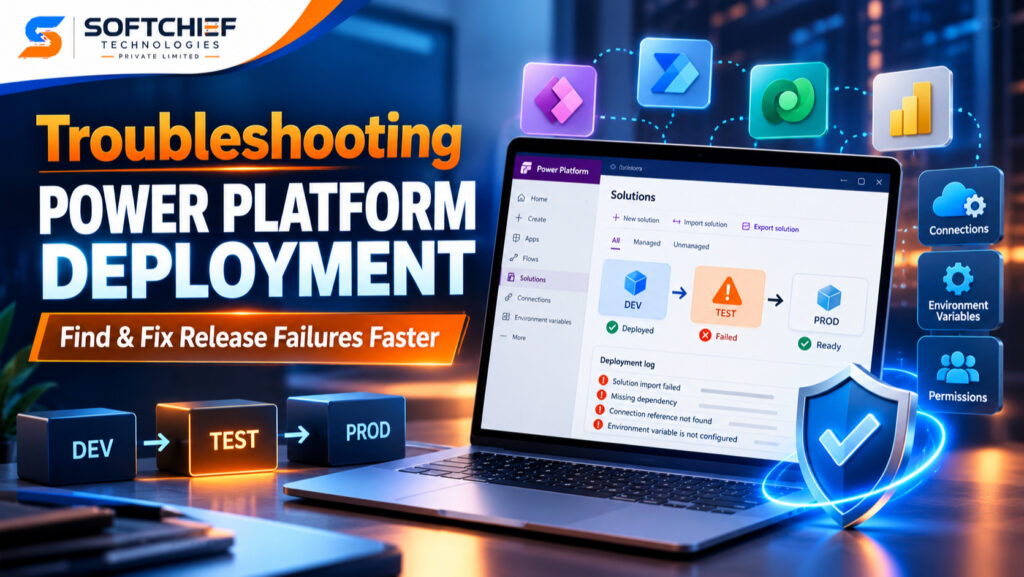
Troubleshooting Power Platform Deployment: Find and Fix Release Failures Faster

Introduction A Power Platform deployment can fail during solution import, connection setup, flow activation, or environment configuration. Find the failed stage and save the full error before changing the solution. This guide helps makers and admins trace issues across Power Apps, Power Automate, Dataverse, and deployment pipelines. It focuses on safe, repeatable checks instead of…
Read more

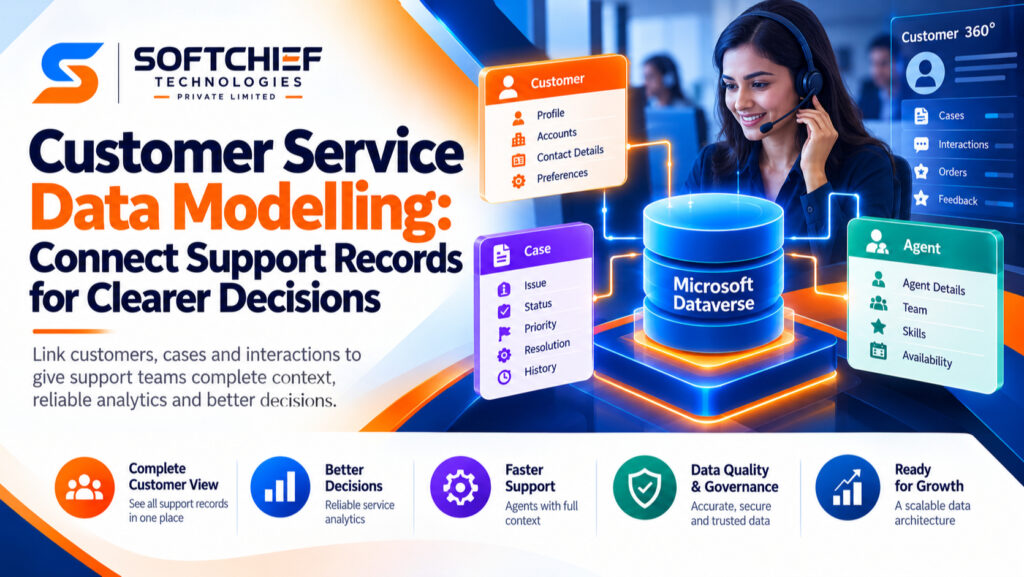
Customer Service Data Modelling: Connect Support Records for Clearer Decisions

Introduction A customer may contact support by chat, then follow up by phone about the same order. If each system holds a separate record, an agent may miss useful context. Customer service data modelling connects those records so support teams can see what happened and act with better information. Customer service data modelling is the…
Read more

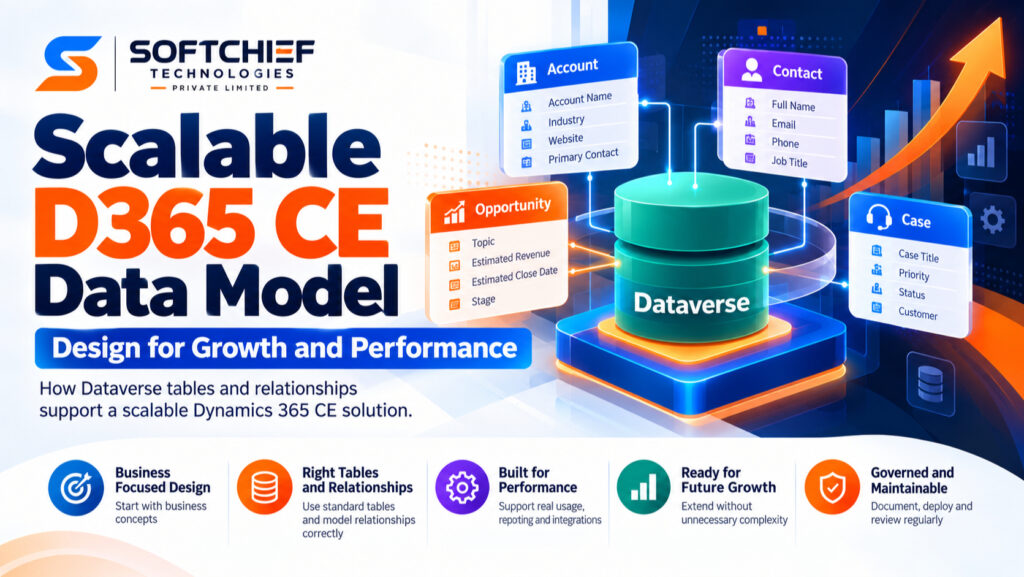
Scalable D365 CE Data Model: Design for Growth and Performance

Introduction A D365 Customer Engagement (D365 CE) solution may begin with a few tables and links. As teams add processes, apps, and integrations, that model can become harder to change and maintain. A scalable D365 CE data model starts with clear business concepts and fits the capabilities of Microsoft Dataverse, the data platform used by…
Read more

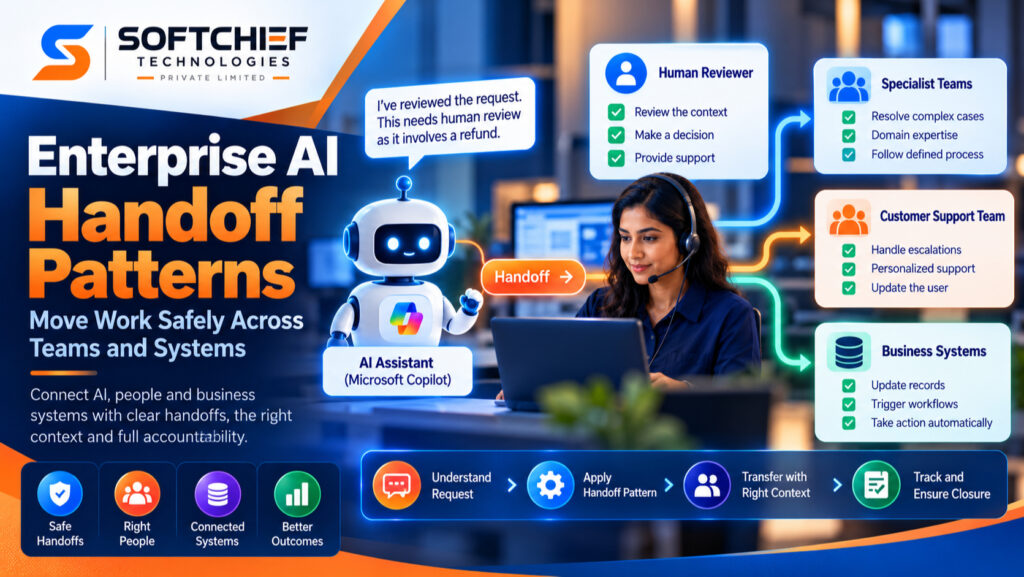
Enterprise AI Handoff Patterns: Move Work Safely Across Teams and Systems

Introduction An enterprise AI handoff pattern determines what happens when an AI can’t finish a task alone. It may need a person to review a decision, a specialist team to resolve a case, another agent to handle a subtask, or a business system to take action. When that transfer is unclear, useful details can get…
Read more

Human escalation in Copilot solutions

Introduction A Copilot can answer in seconds, but speed doesn’t settle every request. Some questions need human judgment, authority, or empathy. Human escalation in Copilot solutions is the planned transfer of a conversation or decision from a Copilot to a person. A clear handoff can protect trust and help people get the right support without…
Read more

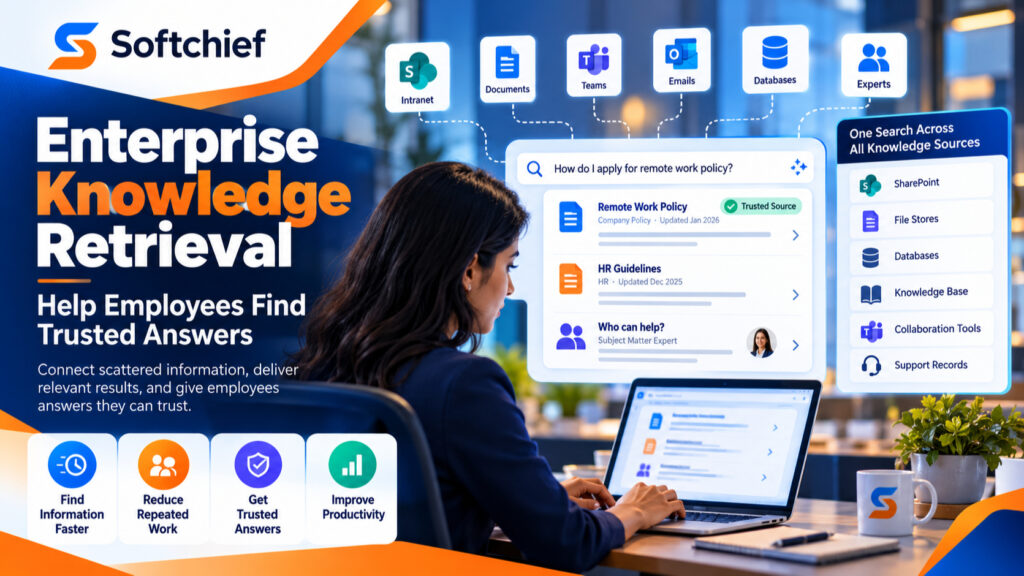
Enterprise Knowledge Retrieval: Help Employees Find Trusted Answers

Introduction An employee can lose a morning searching for a policy that should take minutes to find. When company knowledge sits in scattered files, chats, and databases, people repeat work, use old guidance, or miss the expert who could help. Enterprise knowledge retrieval helps employees find relevant, trustworthy information across those systems. A useful system…
Read more

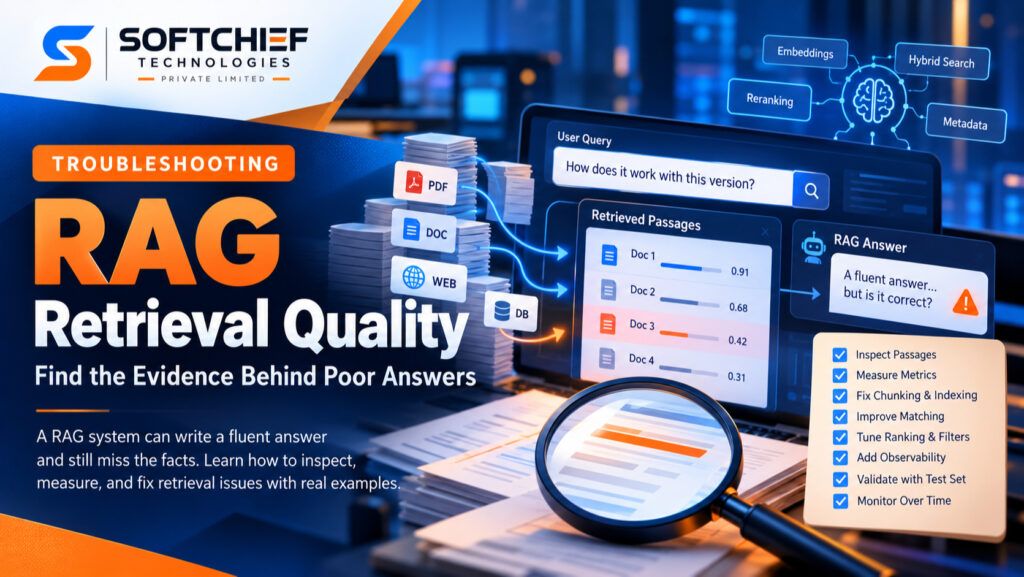
Troubleshooting RAG Retrieval Quality: Find the Evidence Behind Poor Answers

Introduction A RAG system can write a fluent answer and still miss the facts a user needs. Poor results may start with retrieval, generation, or both, so a polished response alone won’t tell you where the fault lies. Start by inspecting the passages returned for real user queries before changing prompts or models. The evidence…
Read more

API-Based Power Platform Solutions: Connect Apps and Automate Work

Introduction A sales team updates one system, finance checks another, and someone copies the same order details into both. API-based Power Platform solutions can reduce this manual work by connecting apps and services through supported connectors, custom connectors, or direct API calls. The right approach depends on the API, the job, and your organization’s security…
Read more

Secure Power Apps External API Integration: Protect Credentials and User Data

Introduction An external API can add useful features to a Power App, such as live shipping details or customer records. But a weak connection can expose credentials or send private data to the wrong people. Secure Power Apps external API integration starts with choices about identity, access, and where each request is handled. Security doesn’t…
Read more

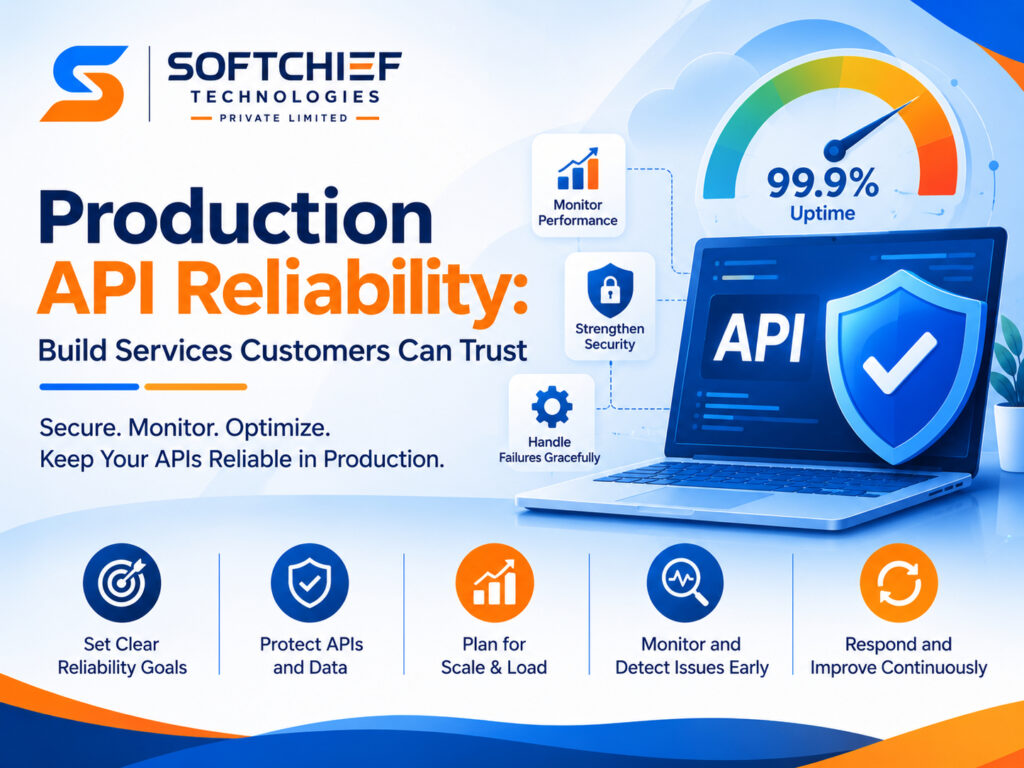
Production API Reliability: Build Services Customers Can Trust

Introduction A slow or unavailable production API can stop a checkout, delay a shipment, or break another service. Customers feel the impact in their work, so API reliability affects trust and revenue as well as infrastructure metrics. Reliable APIs deliver successful, timely, correct responses and keep working when traffic rises or a dependency fails. Teams…
Read more

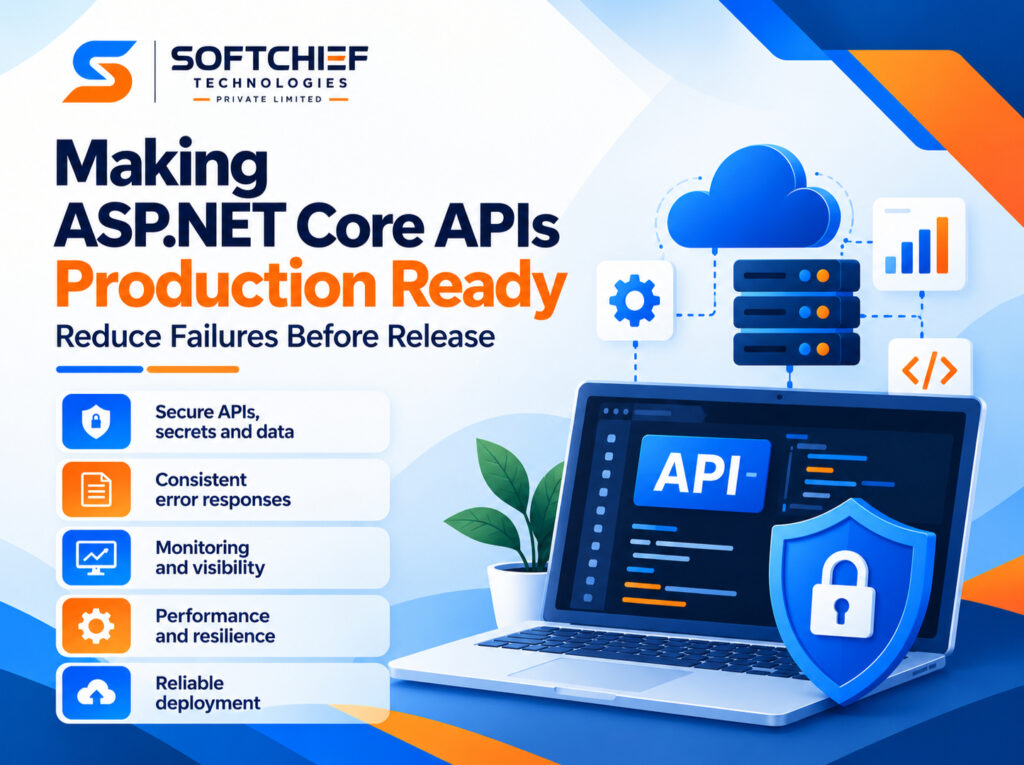
Making ASP.NET Core APIs Production Ready: Reduce Failures Before Release

Introduction Making ASP.NET Core APIs production ready takes more than confirming that an endpoint returns the right response. An API can work on a developer’s machine yet fail under traffic, expose private data, or leave the team guessing during an outage. A dependable release needs secure settings, clear error responses, useful monitoring, and tested deployment…
Read more

AI Agent Testing & Monitoring: Catch Failures Before They Reach Users

Introduction An AI agent can sound certain and still fail at its job. It might choose the wrong tool, change a record without permission, or repeat the same action until a task stalls. AI Agent Testing & Monitoring must check the agent’s actions and results, not just whether its final response sounds good. Testing helps…
Read more

Evaluating Enterprise AI Agents: A Framework to Prove Performance and ROI

Introduction An AI agent can look impressive in a polished demo, then fail to finish a routine business task. It may find the right form but enter the wrong data, or give a confident answer without making the promised change. That’s why evaluating enterprise AI agents takes more than checking answer quality. You need to…
Read more

Azure Identity Patterns That Reduce Credential Risk

Introduction An employee signing in, a customer opening an app, and a service reading a file need different identities. Choosing the right Azure identity patterns helps protect credentials and control access. Microsoft Entra ID is the current name for Azure Active Directory (Azure AD). Start by identifying the actor, then match its sign-in method and…
Read more

Secretless Azure Applications: Cut Credential Risk Without Losing Control

Introduction A client secret copied into an app setting or pipeline variable can outlive its purpose. If it leaks, someone may use it until you find and replace it. Secret rotation also takes time and can break apps that still depend on an old value. Secretless Azure applications reduce that burden by using identities provided…
Read more